 Otiato Guguyu
In this age, if you want to insult politicians and not end up dead, in prison or both, maybe you should consider learning Oluoch Madiang’s poetry of resistance, and saying it as it is.
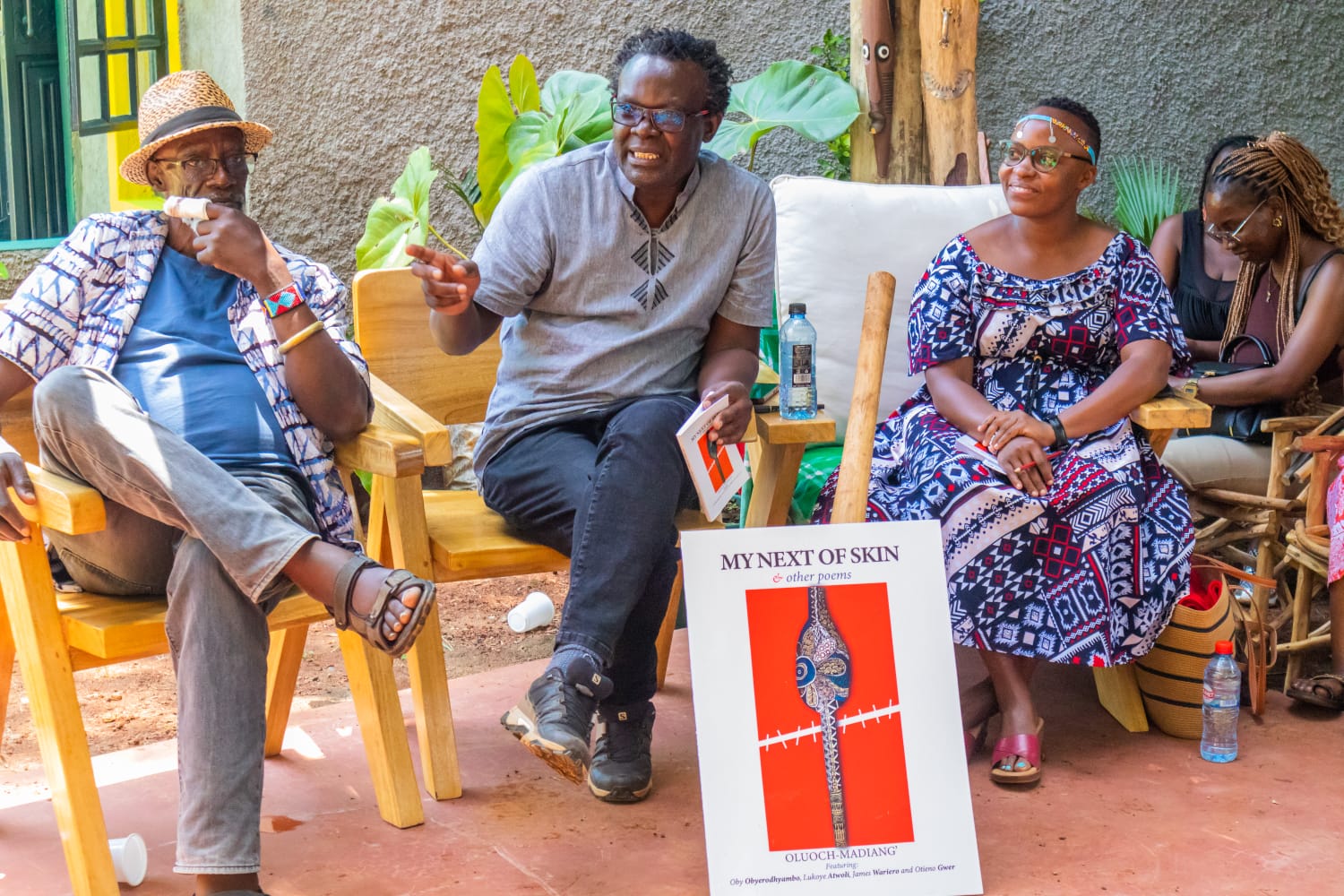
The Next of Skin is a rich collection of Madiang, Lukoye Atwoli, Stephen Otieno Gwer, James Ogola Wariero, and Oby Obyerodhiambo, rising up to the question that confronts us all Africans, sorry Alkebulans as the world order that created our colonial illusion collapses; How do we situate ourselves in this Gen Z struggle that is as old as humanity’s resistance to subjugation.
The collection that opens with ‘Happy New Year, My Friend’ and ends with ‘Bye Bye Baba’ is a must-read for Gen Zs who he calls the Arrivants, wamefika, if they are to learn about the history of the struggle. It reveals the levels of control the system uses to subjugate the society, and our complicity in it, including autopsying the death of Raila Amolo Odinga, the people’s champion against it.
Read also: Taban Lo Lyong’s After Troy
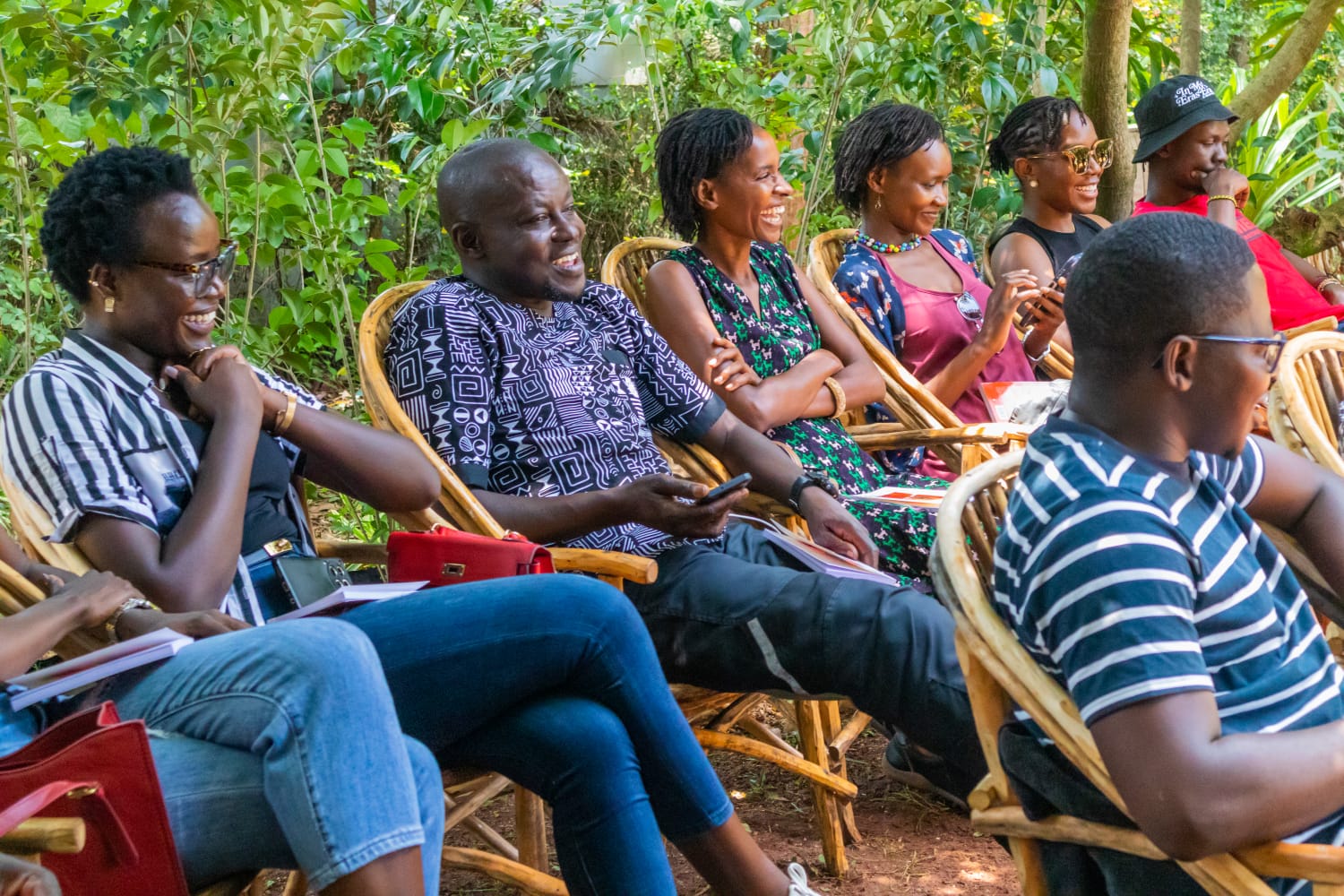
The collection of poetry, which Madiang calls nuts of wisdom from a few squirrels gathered in vaults over time are uniquely timely pieces and very well curated, revealing the parallel lives of the Kenyan psyche. That guy you see every day, chained to the eight-to-five job, may be hoarding poetry after the hustle.
That the spark in the average Kenyan is there still, even if dimmed by the chaos of this colonial state, that is hell-bent on dismantling us, as young as Baby Pendo. Before we come of age, or before we arrive and demand change like Gen Zs.
These elders take up their roles to educate the young, struggle, aluta continua, while introspecting on the age of the ostrich for Kenyans to come face to face with how easily they are being manipulated by tribe.
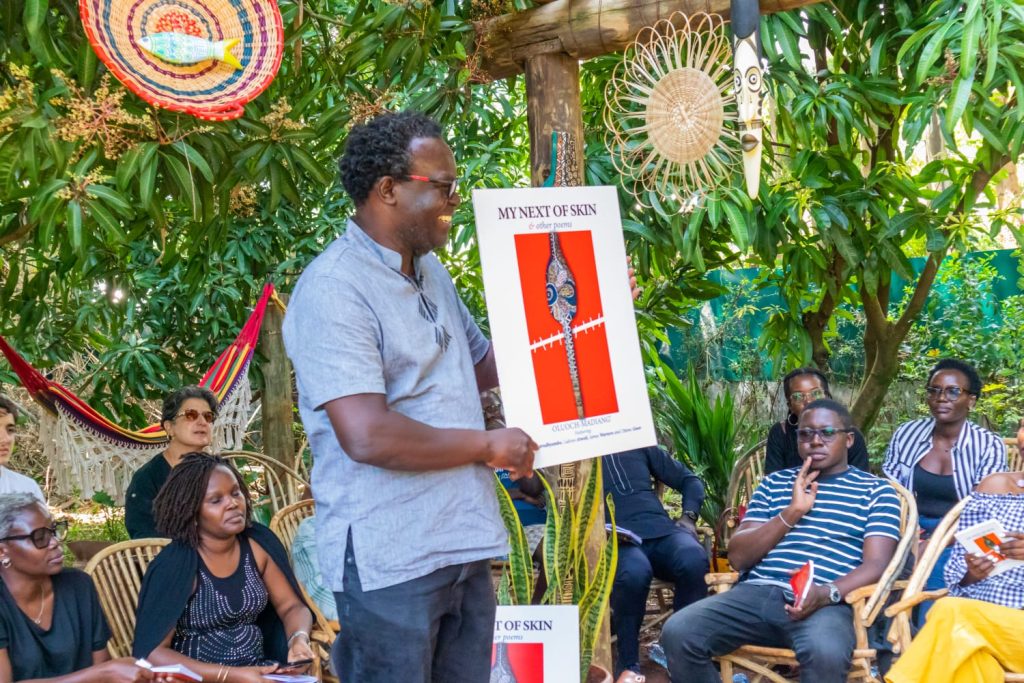
I personally loved his series on the system, which allowed me to see how I, a journalist looks in a mirror, and apparently it is jaundiced.
Madiang tells me the systems was an interesting question for him. Everyone complains about the system, yet they, too are running a ‘system’ that puzzles others.
“These 12 series was to expand the quest for accountability by ‘all’ systems. Sometimes, the Poet observes, people accuse the political system as a deflection to their own equally monstrous systems. I hope that folks then have been equipped to question all systems: local, domestic and external to themselves,” he said.
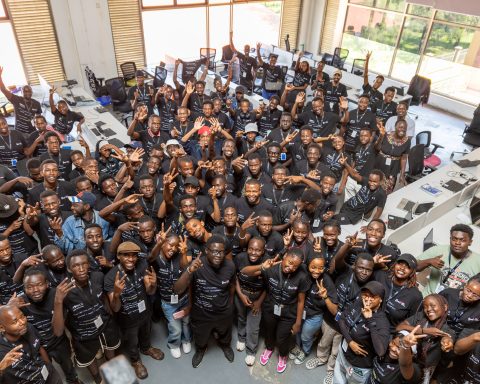
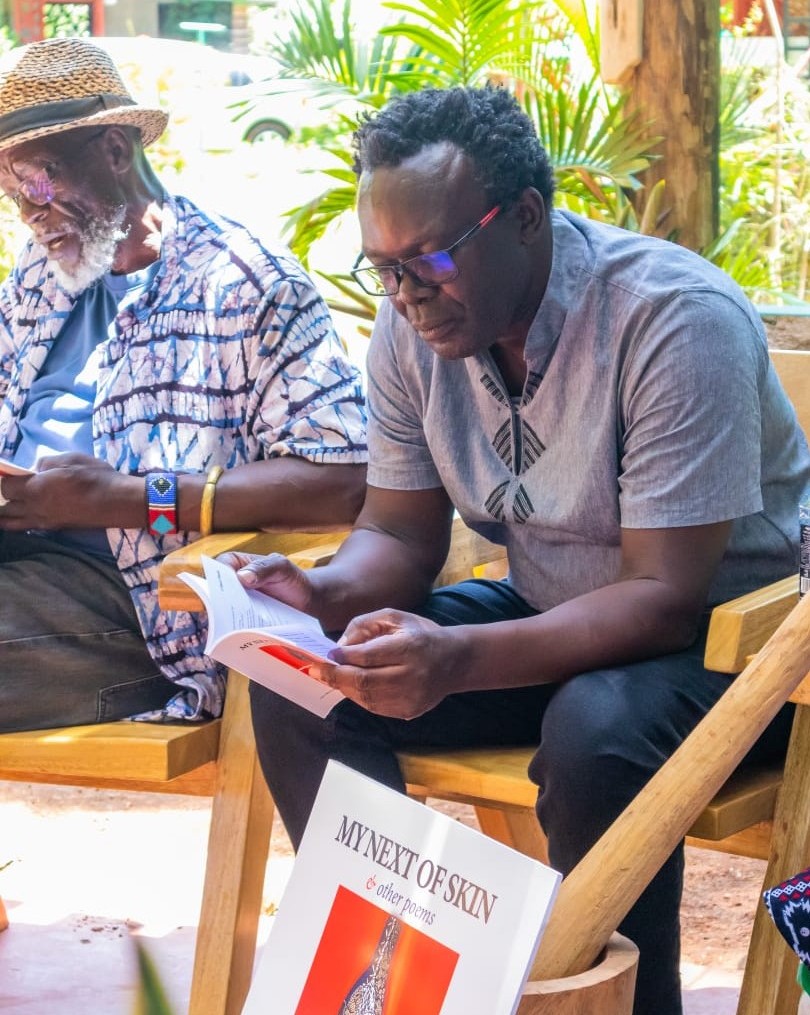
The poet recently launched the book in his Peasant Shamba, an expansive home in the canopy of Nyahera in Kisumu where he has recreated the garden of Noah with almost all plant species and varieties you could not think of.
I missed the official tour as I had been shooting another event for Seamless Frames. Getting to the Shamba was no easy task, navigating with a matatu and having to ask around on the last stretch on a Peng. I was only saved by a Japolo who had an event at their Israeli churches and the centenarians were about in their all-white garbs.
When I arrived at the grounds hemmed by tree-sized bamboo, well-cropped live fence, and hedges with a splash of rose bushes, miraa and cocoa, I knew I had ‘arrived’. The shamba is pleasant, you would not want to leave, it is the garden of Eden as god intended it.
It reminded you that on these shores of this Nam, everything under the sun can be created, if you do the lord’s work. On this shamba you saw work was done here, years and years of work.
When I ask Madiang if the Peasant Shamba is a response to the Mandela poem and living in matchboxes while complaining online like keyboard warriors.
“I get amused at how we sometimes rage over injustice elsewhere, and ignore (sweep under the carpet) the domestic issues,” he says.
“We get raged at shootings in schools in the US, but not the rape and killing of girls going to school. We even adopted the ‘I am France’ slogan, but didn’t, for example, ‘I am Garissa’ when the students got killed. We pity Mandela, but demonise our own heroes based on silly differences. We cry at how Mandela suffered, yet we are okay with our potholes, blackouts, uncollected garbage, bad hospitals, etc,” he said.
I also asked him, as Ingwe fan aggrieved for being called chicken legs yet we are Yamatere the one of the claws, why he was praising Kogallo and critiquing our addiction to English football. Wasn’t our Giniwasekao attitude interchangeable even as we wait for my Arsenal to bottle it again, hehehe.
“Hah, hah, hah! Well, the two poems, ‘Our Gor Mania’ and ‘Systems 12: Making Cabbages in Africa’ are two totally different poems in their thematic considerations. In fact, the latter is closer to ‘Franconquest’, as they dabble on the challenges of neo-colonialism,” he said.
Our Gor Mania is a celebration of our cultural attachments, albeit in a humorous way. (Also, sorry, for as the 99th Mashemeji Derby has proved again, you are still leopards with chicken legs!)

Discover more from Orals East Africa
Subscribe to get the latest posts sent to your email.