Ngugi dared me to write ‘The Stone Hills of Maragoli’ in Lulogooli.

I first met the late scribe Ngugi wa Thiongo at a gathering of authors and other artists at The GoDown Arts Center in 2004. He had just returned to Kenya after a long stay in exile and was trying to reorient himself with the reality of the socio-political transformation that his country had undergone during his lengthy absence.
Just two days prior to the event at The GoDown, Ngugi and his wife Njeeri had been attacked by unknown people at the Norfolk apartments where they were staying. During the attack Njeeri was raped and Ngugi badly burnt by cigarette stubs on his forehead in what the police initially said was a regular burglary, but which had heavy political undertones due to the writer’s past ideological differences with the KANU regime that had caused him to flee into exile. The event was coming just two years after Moi had relinquished power after 24 years at the helm, and the country’s politics was still in a state of transition. We, the invited artists at the event, didn’t really expect Ngugi to turn up after what had happened. Which is why we were surprised when he did. Most likely he defied his doctor and came.
I remember there were these security types shadowing him who were trying very hard to melt into us, with the ‘niaje, buda’ s and the phony smiles and ‘chali wa mtaa’ get-up that didn’t fool anyone. The one thing that gave them away were the open jackets. And if you looked closely you could see the bulge of their hardware – or ‘mguu ya kuku’ in streetspeak – under their jackets.
Anyway, necessary as they were, they vexed our returning man of letters, and he said so. Appearing rather calm after the harrowing ordeal he had been through, he told us he longed for the opportunity to slip into a kibanda at the vegetable market in his Limuru hometown and sit in a dark corner and order a cup of tea without people noticing or mobbing him. That that would have been the best way to touch base with his homeland; just sitting there incognito observing and listening to the market women and local farmers and traders going about their everyday business. But, alas, it was impossible! After all he was Ngugi. We could detect a note of melancholy in the yoke that fame had placed on his shoulders.
One observation that Ngugi made at that event was that as he had been driven around town he had noted that Nairobi had changed; that new and prosperous neighbourhoods had come up where previously there used to be trees, sprawling colonial bungalows, coffee bushes and open fields. That the city’s middle class had swollen phenomenally as more new money was injected into the city’s economy.
However, he noted that for every new ‘gated community ‘ that came up, an equally populous and squalid slum came up alongside, attaching itself to the new housing estate like a tick on a cow. It was this slum that provided the new middle class with their ayahs, househelps, guards, plumbers, electricians, commercial sex workers, drug peddlers, and so on in a symbiosis that was mutually beneficial, but which one side did not want to acknowledge. That the new bourgeoisie went as far as erecting twelve-foot perimeter walls topped with coils of razor wire to deny the reality of this symbiosis. It was an apt observation that caused uneasy amusement around the room, given some of the artists in attendance belonged to this class.
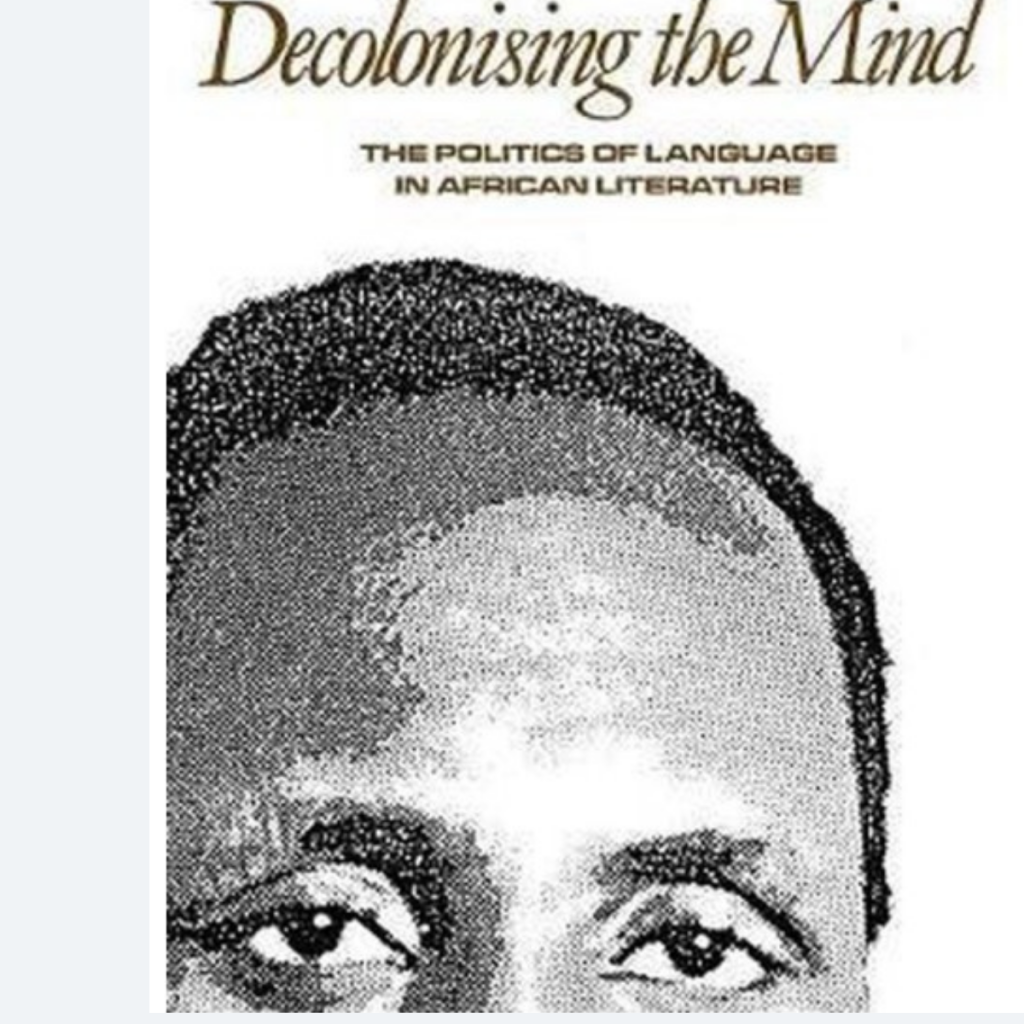
I was observing Ngugi all through the talk. It was the first time I had had a close encounter with him, save for reading him in newspapers and, of course, reading his books. He struck me as ‘kawaida’-looking in his plain African print shirt, disheveled hair and slightly discolored teeth. He also had a slightly distracted look and spoke with a stutter, in soft measured tones, as if he was either not very sure about what he wanted to say, or was weighing his words very carefully. He was quite unlike the image we had conjured up of him over the years of this larger-than-life fiery intellectual whose Leftist ideas terrified Moi. Ngugi the man could easily fool you. If you didn’t take a close look – and if he wasn’t being shadowed by those security guys – you would easily pass him by at the bustling market in Limuru. His power lay not in his personality but on the pages of his work, I concluded.
After he was done he asked for questions, and I remember Tony ‘Smitta’ Mochama asking him something about Marxism, together with two or three other questions from the little gathering. Otherwise we were generally awed by his presence and were waiting for him to say something explosive that would turn us into conspirators of sorts. We were waiting to be inducted into the mystic underground Mwakenya cult that had shadowed the rumour mills of the terror-filled Kenya of the mid 80s and 90s, and which had made people glance over their shoulders and speak in whispers at the pub, even when no one was listening in.
There was no mingling afterwards because soon after he concluded, the security guys showed their fangs and quickly mobbed and whisked him away in a car with tinted windows and we were left to sip drinks and digest the enigma of our whirlwind meeting with him.
I later ran into him at an evening party at an ambassadorial residence of a Scandinavian country -I forget which country it was- in Muthaiga shortly after. This time, even though the security guys still lurked in the shadows, it was more relaxed, after all we were not technically on Kenyan soil. Up on stage Eric Wainaina was belting out his signature “Nchi ya Kitu Kidogo” and the mix of diplomatic types and artists on the lawns were dancing on the spot, sipping their drinks and snacking as they chatted.
I was passing by a log fire lit on the lawn from getting a beer when I spotted his publisher, the late Henry Chakava, who was known to me. I went over to say ‘hi’ and saw Ngugi closeby, wrapped in a coat over his kitenge shirt, warming himself at the fire. Chakava pulled me over to make the introduction.
We chatted for a while, with Ngugi inquiring about what I was working on currently. He was quite genial and easy to talk to for a writer of his stature, listening carefully and only interjecting when the opportunity presented itself. Because I had put a couple of beers under my belt I told him that I thoroughly enjoyed his earlier books, but that he had lost me in the latter books he was producing in exile, which leaned heavily on ideology at the expense of the craft. That I could no longer recognize the Nairobi he was writing about in his latest books, even though I lived in the city. He gave me a piercing but bemused sideways glance, but did not erupt. His publisher, who was listening in, smiled.
Soon the conversation – as expected – drifted off to his pet subject of language. He wanted to know if I had ever considered writing my novel ‘The Stone Hills of Maragoli’ in Lulogooli. I mulled over it for a while, sipping my beer, watching his publisher, who happened to be my tribesman, before telling him that it was close to impossible to write a novel in Lulogooli. That the language was largely oral and aural. That if we wanted to go that route, then we needed to first work on the medium because it wasn’t a straight forward matter of simply putting your thoughts on paper.
We needed to come up with a proper Lulogooli alphabet and a stylebook that smoothed out the rough edges the missionaries had created in the Westernized version that they had come up with when translating the Old Testament at the Kaimosi Mission.
He probed further, now quite interested, wanting to know what these ‘rough edges’ that needed smoothing out were, and whether what I was saying was more in my mind than the reality. He wanted to know if I had ever attempted it, or was just saying so because it is something I thought. Chakava was following the discussion, similarly quite immersed.
I told him that the alphabet and stylebook needed to encompass the phonetic and syntactic nuances of the language, and not merely subject it to a Latin or Roman algorithm like the missionaries had done with the Old Testament and the Quaker hymns they had translated to Lulogooli for the first Maragoli converts; and which was akin to wringing the language through a tourniquet because the translation came out dry and stilted to a regular Lulogooli-speaking ear. It needed to capture Lulogooli vowels and intonations correctly in order to make smooth reading possible.
It turned into a heated back-and-forth tug that seemed destined not to arrive at any meaningful settlement, largely because he wasn’t getting the explanations I was giving, neither was I agreeing with the direction his argument was taking. And Chakava was offering no support either, given he is a Lulogooli speaker who could clearly get what I was trying to say, but who opted to stay clear of the argument.
In the end the argument was salvaged by some literary types from his UoN days who ambled over, colonizing him, and shunting me and my heated but pointless argument to the side. I gladly slinked off to replenish my beer, the match having ended in a barren draw.