 Oral East Africa
In 2019, Netflix released a documentary on the organisation known only as the Family shedding some light on the organisation that has weaved its web into American politics for decades and by extension has controlled Kenya.
What was considered merely conspiracy theory for a long time is getting mainstream attention especially as the Christian right finds renewed energy since President Trump’s election and the success of the late Doug Coe who took over from the organisation’s’ founder Abraham Vereide; to create an annual gathering of religious leaders in the world of politics, business and culture come to Washington every February to share a meal and build networks among like-minded believers.
This organisation exerts its influence on US leaders through secret meetings and endorses presidents across the world including in Kenya, where it is institutionalised in Parliament through an annual ritual called the National Prayer Breakfast.
Read also: The Baptism of Noah Jahera and how the colonials captured Africa’s religious imagination
This American Church group has been very invested in Kenya through US Senator Chris Coons, who has been an active player in local politics.
He is credited with bringing together President Uhuru Kenyatta, Opposition leader Raila Odinga and President Ruto during the 2020 National Prayer Breakfast to facilitate a smooth transition.
During the last election, the Delaware Senator also came to mediate the political stalemate when he met the three leaders. The US senator’s heavy involvement was not lost on opposition supporters who made claims that the Americans meddled in the election with Winnie Odinga, the daughter of leader Odinga, claiming she couldprove the interference.
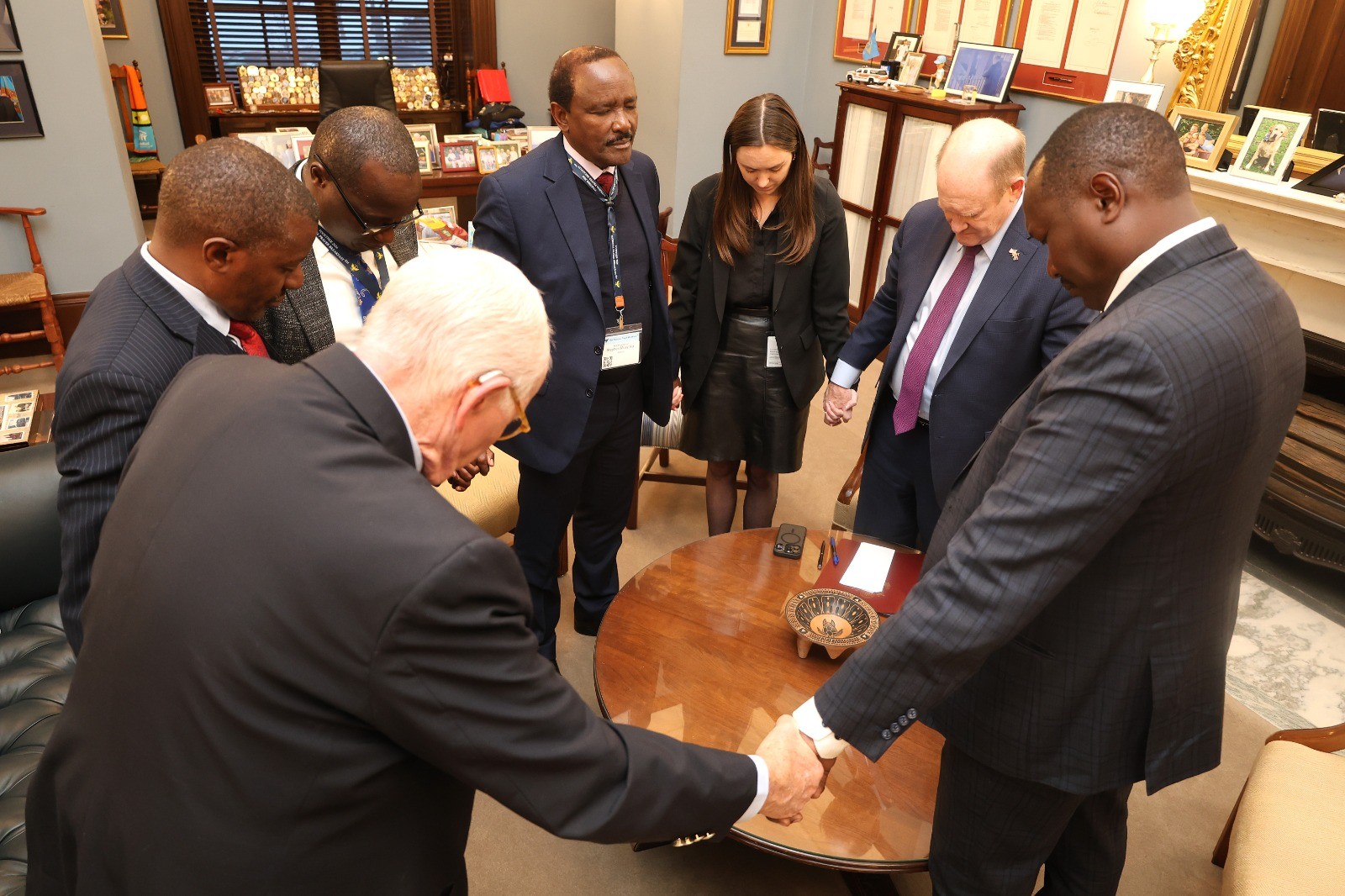
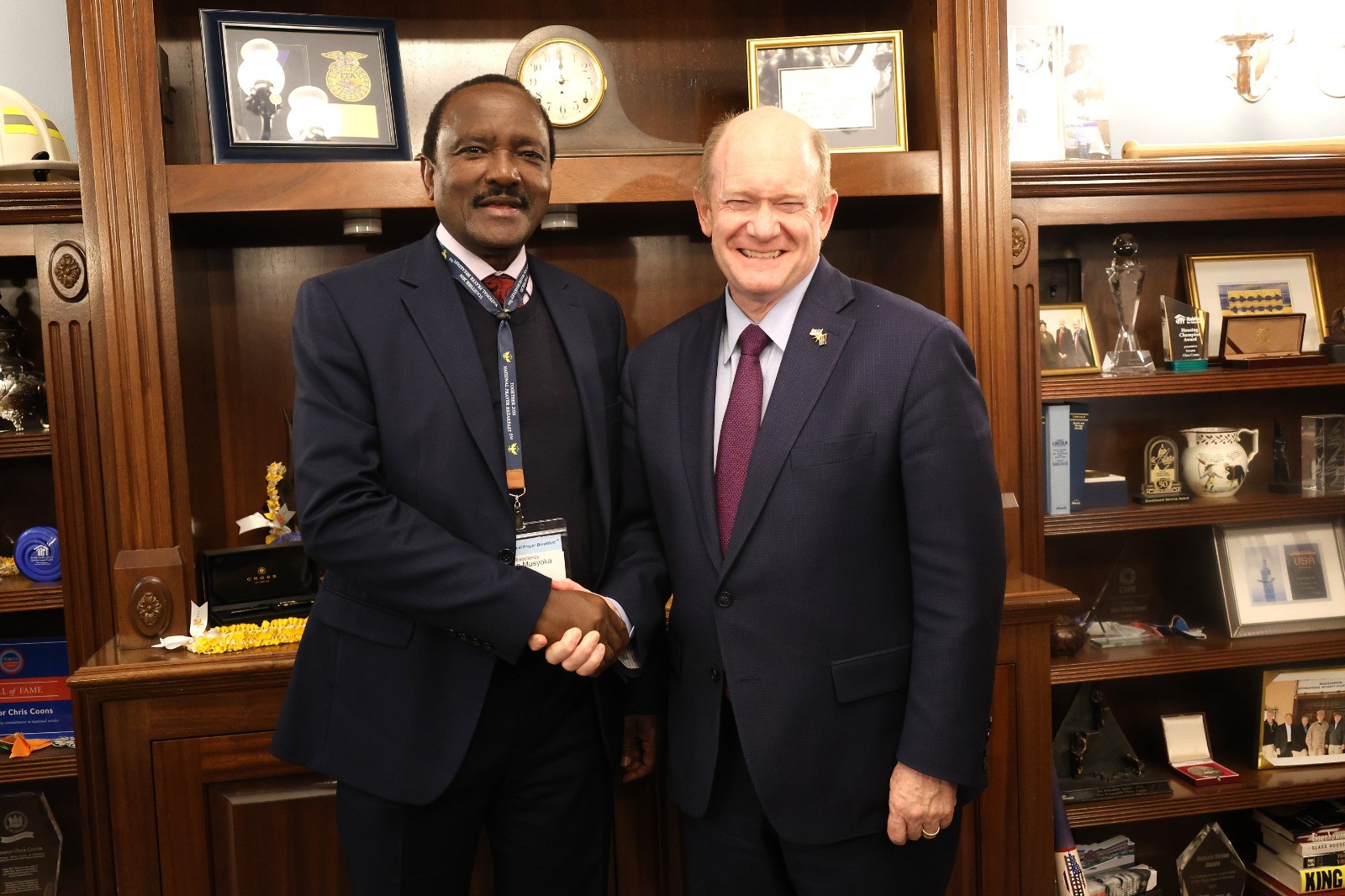
As Azimio la Umoja One alliance party leader Kalonzo Musyoka visits Washington DC for the 74th National Prayer Breakfast, it may be apparent that the foreign religious power that had supported President William Ruto has shifted.
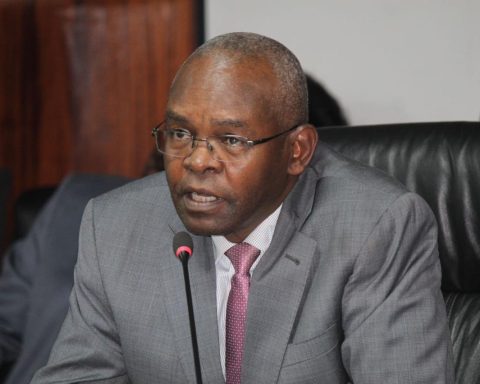
“These engagements are about more than diplomacy. They are about securing Kenya’s place in the community of nations, building relationships that matter, and ensuring that our country remains respected, heard, and influential on the global stage. Kenya must stand where conversations that shape the future of nations are held. And we shall remain present, purposeful, and prepared,” Kalonzo said after meeting Sen. Coons.
The National Prayer Breakfast was first held in the US by the Fellowship Foundation, the controversial, shadowy American religious organisation that coordinates secret meetings among politicians with chapters in several African countrie,s including Kenya.
In Kenya, this organisation has held 22 national prayer breakfast meetings across different presidents with themes like transition, reconciliation and hope.
According to Kenya National Prayer BreakfastWebsite, the organisation holds weekly small prayer groups, with an undisclosed agenda with the guidance from the international group.
It brings together men from the small groups, their friends and associates, as well as other strategically invited national leaders. The Gathering is known as a ‘safe space’ where the truth is spoken candidly in love. Although there is no formal agenda, there are important speakers guiding the conversations. About ten percent of the participants are International invitees.”
The Group has also a recruiting Youth wing called Africa Youth Leadership Forum, selling Jesus as the solution of Africa’s problems.
“The challenges of Corruption, Ethnic and Religious conflict have continued to rock governments and the politics of Africa. There is a lack of a revolutionary perspective of Jesus among the majority of young people yet they are the current largest population in most of the countries in sub-Saharan Africa that have the potential to influence change.”
The dalliance between the Church and State in Kenya has been institutionalised since the colonial days but under American evangelical tilt, it has taken over Kenya’s thinking has been used by politicians to control the public.
Religion played the most important role in President William Ruto’s election, blending his promises for a Hustler’s haven with the attitudes of prosperity gospel gifting him the presidency.
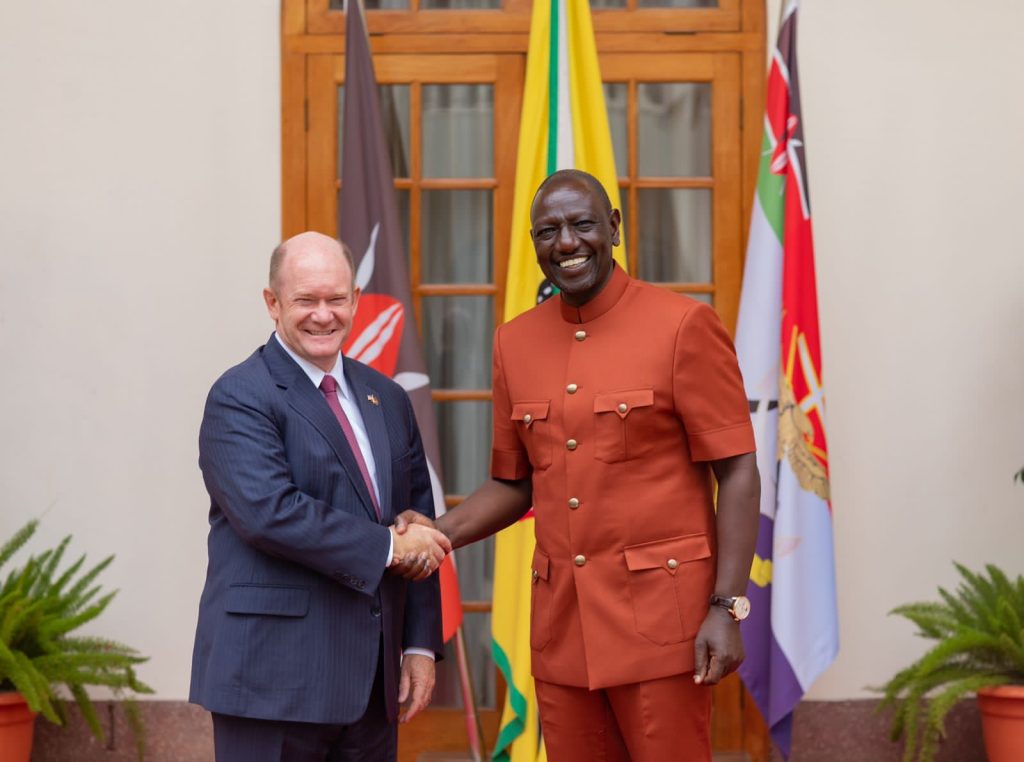
President Ruto donated millions to churches each Sunday mostly in Central Kenya which also gave him a platform to project to believers mixing religion with politics on the pulpit.
The President promised the churches goodies including state land to Jesus Winners Ministry based at Roysambu which has been fighting over a parcel of land allegedly sold to it by Uchumi Supermarkets. This land has, however, since been seized by the Kenya Defense Forces.
A section of the political class led by former Prime Minister Raila Odinga hit back at churches forcing some of them to deny politicians the much-needed spotlight at their podiums in what was increasingly being seen as an endorsement by the believers in the just concluded polls.
A few churches even returned the money they had received from politicians, terming it proceeds of corruption.
The battle to control churches was so intense that it featured amongst the widely coordinated misinformation strategy where a viral video of Azimio leader Raila Odinga seemed to suggest he will discriminate against Christianity if elected.
His spouse, Ida Odinga, was also forced to apologise after she made remarks in Kisumu County challenging the National Council of Churches Kenya (NCCK), an umbrella for protestant churches, to “regulate the establishment of churches” and disband small churches.
“I wish to this morning withdraw the statement I made to NCCK on Saturday 29th (asking them) to regulate the churches under them in order to promote consistency and relevance in messaging for promotion of evangelism in Kenya.
“It has come to my realisation that my comments haven’t sat well with some members of the church. I sincerely apologise for the discomfort caused as I meant no harm to any person,” said Ida in a statement.
Such a backlash was expected. Kenyans are not just highly religious, as a 2016 survey by American think-tank Pew Research Centre showed, most of them also profess the Christian faith-one of the lasting legacies of British colonialism.
Data from the 2019 census conducted by the Kenya National Bureau of Statistics (KNBS) shows that the majority (85.5 per cent) of the Kenyan population are Christians with Protestants, Catholics and Evangelical churches accounting for 33.4, 20.6, and 20.4 per cent, respectively.
And in Mount Kenya counties of Nyeri, Kirinyaga, Murang’a, Kiambu, Nyandarua, Embu, Meru, and Tharaka Nithi, a rich vote-hunting ground for Ruto, data showed that the Christian population averaged a high of between 96 and 98 per cent with a relatively high representation of the Evangelical churches.
Previous administrations have also courted the church. However, their preferred churches have often been either Catholic or Protestants.
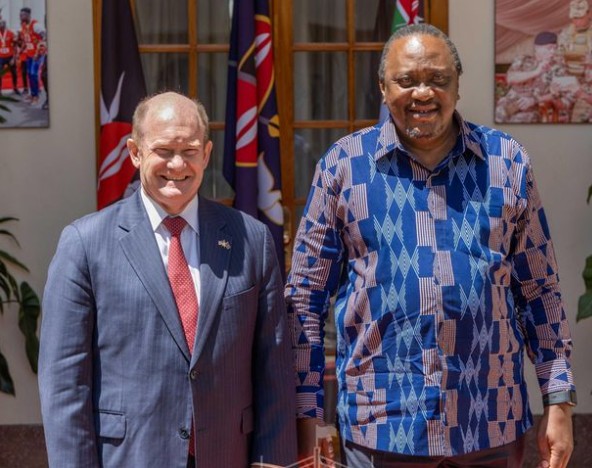
Although President Kenyatta is catholic, he fell back on the Akorino, an indigenous church that emerged from breakaway Christians during the colonial period in the 1920 hoping to sway the conservative group estimated to number about one million to counter the religious wave that supported Ruto in Central Kenya.
The evangelical church, celebrated President Ruto’s victory with a youth group gracing the inauguration through gospel music including a rare Israeli ritual where a woman fully dressed in white blew the Shofar (a ram’s-horn trumpet formerly used by Jews as an ancient battle signal) as Ruto was being sworn in office.
The ritual brought in the internationalism of the Church’s investment in Ruto’s victory especially following a strange video of two Israelis who hailed President William Ruto’s incoming leadership and blew shofars in honour of his new leadership, saying he is going to bring peace to Kenya and honour to the people of God and tribe of Judah.

Discover more from Orals East Africa
Subscribe to get the latest posts sent to your email.