WAJIR BY MIRAA PLANE
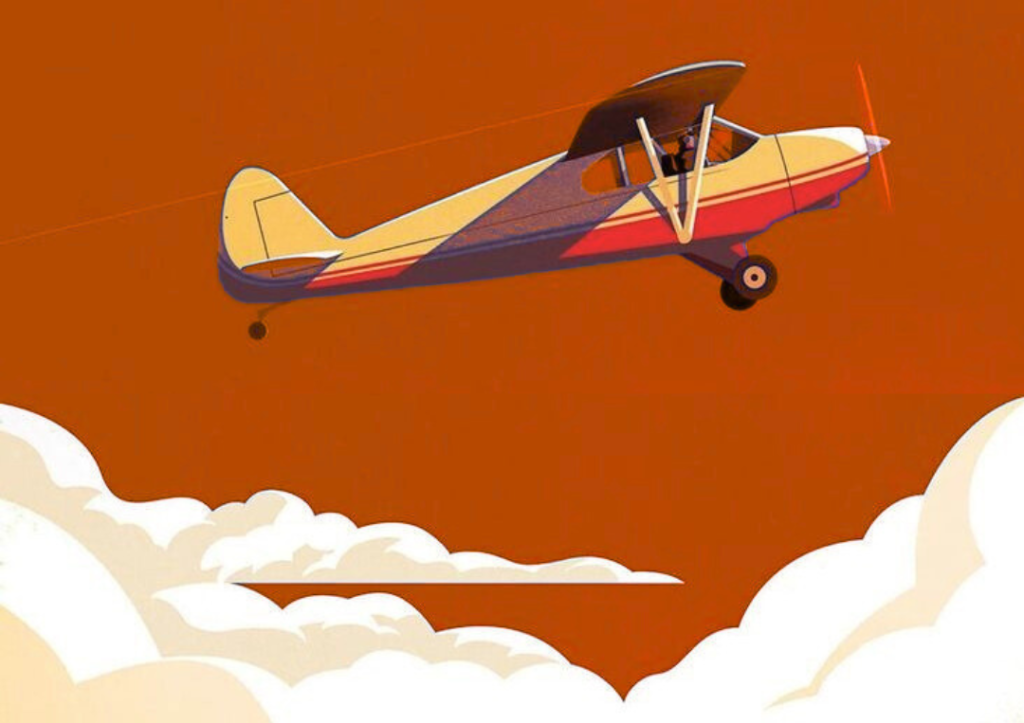
It’s a lazy Saturday morning. Two bicycle mechanics are sitting on a bench outside their ramshackle shed, half bored, half nostalgic. They’re waiting for customers, but none comes. Instead, they watch their youth stroll past, whistling, without even saying hi.
One of them, the younger one, is hunched over his ancient kabambe held together by an oily rubber band and blind faith. He’s squinting at a message from his girlfriend, who is a thousand kilometres away. His brother, the older one, is chewing a matchstick, wishing it were muguka.
Then, a boy from the estate shows up with a bicycle. The rear tyre has surrendered to life, and the lad wants it fixed. The brothers pounce on the opportunity and ten minutes later, the tyre is patched, the bike is ready, and the two brothers are richer by two hundred shillings. Just enough to fund both spiritual and chemical enlightenment.
With their early morning earnings, they reward themselves by buying a kanuthu of Safari Cane and a bunch of muguka leaves. The older brother chews thoughtfully. The younger one chews passionately, as if the muguka will bring his girlfriend to him by Bluetooth.
“Bro,” the younger says after a while, eyes red and glowing, “I miss her. I really miss her.”
Now, muguka is chewable herb that doesn’t respect logic. It turns lazy men into philosophers, drunk men into engineers, and hopeless romantics into lunatics.
The elder brother spits out a green jet and says, “Why don’t we just go see her?”
“You mean by bus?”
“No,” he replies, mid chew. “We build something. A flying bicycle.” There was silence, then laughter, then more muguka. Then an idea that refuses to die. The two lads then drag out the scrap metal and steel bars lying around the yard -leftovers from broken dreams and unclaimed boda bodas. After furious welding and cutting, the air fills with the smell of burnt metal, ambition, and cheap alcohol. Hours later, what stands before them looks like something between a wheelbarrow and a dragonfly.
It is ugly. Magnificently ugly. The kind of thing that would make a madman burst out laughing. But in their muguka blinded minds, it’s their key to her.
They wheel it to a nearby cliff. The younger brother volunteers to go first, because the primordial hormones in his hips are hissing dangerously, seeking escape. He straps himself in. His brother says a quick prayer that sounds more like a dare, then he pushes. The contraption leaps. For a glorious second, it hangs in the air, flapping its tiny wings like a startled chicken. He flies for some seconds, then gravity takes over. The muguka inspired contraption heads for the ground, and crashes, having been airborne for twelve seconds.
But in those twelve seconds, history is born. That, my friends, is how flight began. In some windy town in Ohio, U.S.A., in 1903. Two brothers, Orville and Wilbur Wright, high not on muguka but on pure youthful enthusiasm, turned scrap metal into a dream. Okay, I made up the muguka and crude spirit part just to spice things up, but the rest is true.

The first flight lasted twelve seconds. Twelve seconds! You can’t even boil an egg in that time. I’m convinced Orville Wright’s girlfriend dumped him soon after. Ladies don’t like a man who lasts twelve seconds, but that’s a story for another day.
And that, ladies and gentlemen, is why I don’t trust flying. I don’t trust anything that defies gravity, especially if it was invented by two school dropouts motivated by the need to visit a girlfriend.
You see,the Wright brothers weren’t engineers. They were bicycle repairmen who spent more time drinking cheap hooch than fixing bikes. Orville studied up to grade four before being expelled for stealing steel rods. His brother repeated grade five until even the teacher gave up. Yet, these are the fellows who decided humanity needed wings.
I rest my case.
Still, there comes a time when a man must fly. Like when you’ve endured a 12-hour bus ride to Wajir -twelve hours of being thrown around like clothes in a washing machine – and you swear that your spinal cord has lost all its factory settings. After that, no sane person volunteers to go to Wajir by road again.
Now, Wajir has its own definition of aviation. Their planes operate by rules written in invisible ink. But that’s Wariah business culture for you -informal, fast, efficient, and built on blind trust. A Wariah can close a deal worth half a billion shillings with nothing more than a handshake, a smile and a promise. And surprisingly, it works.
When I worked up north, our office faced the flight path to Wajir Airport. We could see the planes landing from Kismayu, Mogadishu, and Hargeisa for a brief stopover en route to Nairobi. Whenever one touched down, we’d close shop, rush to shower, and sprint to the booking agent’s office.
His name was Shukri, a tall kanzu clad man who was always sipping hot tea in the blazing sun, surrounded by friends deep in conversation.
“Shukri,” I’d start, holding out three thousand shillings, though I knew the ticket cost five.
Before I could launch into my sob story, he’d wave me off. “Hakuna shida, wewe atalipa tu.” No problem, you will pay later.
He’d scribble a receipt, hand me a ticket, and go right back to his tea.
“Salamia bibi na watoto ukifika Kenya,” he’d say, as if Wajir were a separate republic entirely.
And so, I’d jump on a boda boda to the airport and catch the fifty-minute flight to Nairobi.
That’s the thing about trust. When people trust you, you don’t want to break it. Every time my salary came in, I’d go pay Shukri back, only to return the following week, broke again, and borrow another ticket. That’s how we lived – on faith and flight.
But one day, Shukri’s airline stopped flying the route. Suddenly, we were at the mercy of expensive commercial flights or the miraa planes – small cargo planes that ferried khat to the Somali cities at dawn. Owing to my malnourished pockets then, most of the times I flew home via miraa planes.
If you think you’ve flown before, you haven’t – not until you’ve flown in a miraa plane.
These mosquito sized thingies leave Wilson Airport before sunrise, drop miraa in Wajir, Hargeisa or Kismayu, and buzz back before lunch. They are the definition of courage wrapped in aluminum. My first flight in one of those was a near-death experience.
For starters, the plane was claustrophobic – four seats only, since the rest of the space was for miraa sacks. We were five passengers, sitting nervously as the pilot, a wiry man who looked like he’d flown kites professionally, did his checks. Just as the propeller whizzed to life, a Land Cruiser roared across the airstrip. A family of three came running – an elderly woman and her two daughters. The old lady looked sickly, so we gave up our seats and sat on the miraa sacks.
When the plane took off, I came so close to hell I could smell the sulphur. The tiny thing leapt into the air, did a somersault, two cartwheels, then twerked midair like a slay queen in an X-rated video before stabilizing.
As we reached cruising altitude which wasn’t very high since I could see goats grazing in the plains of Habaswein, I began to reflect on my life choices. They say planes take off against the wind. I think small planes should be excused from that rule. This one was panting like a starving donkey.
We rumbled along the clouds, each of us quietly bargaining with our Maker. I promised God a burnt offering if I landed safely, an offer I have yet to deliver, by the way.
Then came the Ngong Hills circuit. Whoever designed that route was either blind, drunk, or both. The plane dipped so low that I could smell nyama choma from below. The sky was heavy with fog – thick, gloomy, like uncried tears.
Predictably, the turbulence hit us like Kenya Kwanza problems. We rolled across the floor like sacks of potatoes in an old lorry. My friend dug through the miraa sacks, looking for something to chew -anything to keep him from puking. In that moment, I’m convinced there wasn’t a single pagan on board. Everyone was a believer.
You see, clouds look soft and innocent from down here. But up there, when you hit one, you realize clouds are the ghosts of rivers – rivers that evaporated, died in the sea, and came back as vapor, carrying the heartbreaks of the earth. When a miraa plane slices through one, you can almost hear those ghosts wailing.
Finally, the plane descended toward Nairobi. We’d been told we were landing at Wilson Airport. Instead, the pilot casually announced we’d land at JKIA in the cargo section. The air brakes hissed and groaned like angry dragons, and we bumped along the runway until the plane grudgingly stopped.
Now, the cargo terminal at JKIA is miles from anywhere useful. By the time we were done with clearing, a bus that left Wajir that morning was already halfway to Nairobi.
After the flight, that’s when I realized that flying is basically throwing your soul into the sky and hoping to catch it before it crashes. When you fly a miraa plane, you’re not even sure you’ll catch it. It’s the closest you can come to playing Russian roulette.
Still, there’s something strangely humbling about it. You land, stagger out of the plane, kiss the tarmac, and suddenly, life feels sweeter. Even Nairobi traffic looks like a blessing.
I may mock the Wright brothers for their love-fueled invention, but somewhere in that insanity lies a truth. Humans were never meant to fly, but we do it anyway.