In death, Raila resurrects the matriarchal culture
We were following the funeral ceremony of the late Baba (Raila Odinga) on Citizen TV with a few friends and were intrigued by certain aspects of Luo culture that were on display at the colourful ceremony.
For a wealthy family that resided most of the time in Karen, Nairobi and had gone to university abroad, it amazed us that the Odinga siblings were still deeply steeped in Luo culture and could speak Dholuo without an accent; unlike the wealthy kids from the dynastic families of our own lands who had schooled abroad, and who would have spoken what we call the ‘Luhyia of the nose’ at a similar gathering.
As we followed the highly-viewed ceremony we were taking notes and comparing aspects of what we were seeing with our own Luhyia culture, since the Luo and Luhyia are neighbours and find confluence in various aspects of their culture, notably music, where the Luo nyatiti lyre is similar to the Luhyia litungu, the Luo sigudi music borrows from the Luhyia isikuti, and so on.
Read also: The Mercurial Baba and his many Chameleon faces
Besides being neighbours, and at the risk of drawing the ire of the other Kenyan tribes, there is no way you can discuss Kenyan culture and politics and ignore the Luo and the Luhyia. For the simple reason that they are a very loud and colourful peoples.
It starts with sports where, save for athletics, which is a Kalenjin affair, the two tribes dominate. The Luo own Gor Mahia Football Club, better known as K’Ogalo, while the Luhyia own AFC Leopards, better known as Ingwe. These two are the oldest football clubs with a fanatical following that transcends generations. You need to attend one of their famous ‘Mashemeji Derbys’ and the attendant pomp and fanfare in order to appreciate this. The two tribes have a long history of friendly rivalry that cannot be ignored when talking about the evolution of modern Kenyan culture. Nonetheless, it is a strange symbiosis because the Luo are Nilotes, and the Luhyia Bantu, which makes this mix of cultures very interesting. It is the reason why we were engrossed in following the proceedings at Baba’s funeral, given it had given us an official public holiday because of the man’s status.
For starters, my Luhyia friends and I found it strange that the doors at Baba’s rural home in his now famous Opoda Farm that has since seen delegates of mourners troupe there from all over Kenya remained closed after his death was announced. Among the Luhyia all the gates and doors at a bereaved household are supposed to be opened as soon as the news come in to signify mourning – or juogi, in Luo culture – and to welcome in mourners from the neighborhood. But of course Baba was not your average villager, and there was an explanation for it.
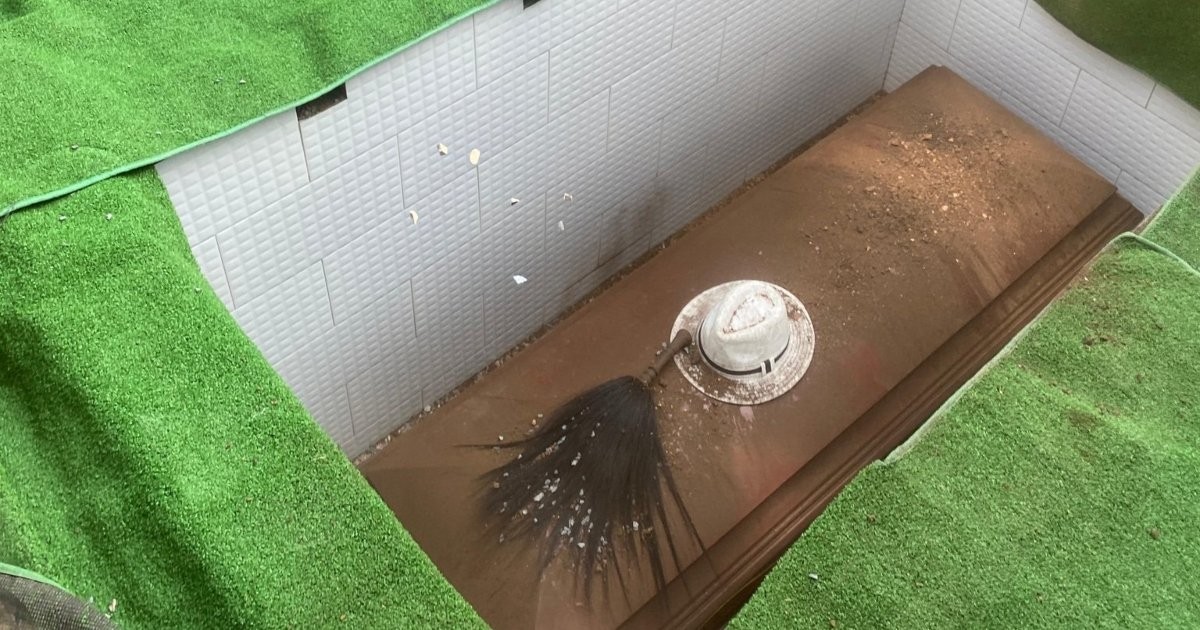
When Baba’s elder brother, Dr Oburu Oginga, eventually arrived from Nairobi and the front doors were opened he explained that his coming symbolized that the news had now been officially brought home and that the mourning could commence in the village. As he waved his traditional flywhisk in his speech there was a village wag among us who was glued to the TV screen. Later, he wondered aloud whether the elder brother, by holding up the ceremony, had also presented the widow a brick wrapped up in sisal string. We asked him what he meant and in response he burst out laughing.

I later learnt that doing that was one way of symbolizing inheritance of the widow among the patriarchal Luhyia, who, just like the Luo, engaged in that practice. There were other symbolic practices and gestures that only a keen eye can observe at the funeral of a patriarch because some are discreet and others not so discreet. For instance, in the Luhyia villages, if a close male relative should donate his tree for timber to make the deceased’s coffin and offer to carter for specific expenses at the funeral, that should raise a flag. And the elders, who will be following the proceedings from their maagore wicker and folding chairs in the shade around the compound as they indulge in a pinch of snuff, will be winking and whispering knowingly to each other.
It is only recently that mortuary facilities were put up at district hospitals and the local administration enforced the requirement to take dead bodies there. Otherwise, traditionally, when the head of a household died, he was laid out on his bed outside at the entrance to his house for viewing and paying of last respects by mourners, with the widow keeping vigil besides in a practice the Maragoli called ‘kogona kokesero’ ( literally, ‘lying on a cow or goatskin – the equivalent of Baba’s lying in state). In the meantime the village carpenters would be busy cobbling together his coffin under the mango tree where the departed used to recline with his callabash of wimbi porridge evenings after his day-long jaunts.
In this fast-paced world of ‘likes’ and ‘memes’ it was refreshing to experience the cultural display at Baba’s funeral, even though linguist and thespian Oby Obyerodhiambo would later note that a number of faux pases were committed in the enthusiasm by the mourners to outdo each other. For instance Oby notes that the ‘Jooowi!’ chant that was repeatedly used by the mourners was being used in the wrong context. That, traditionally, that chant was used in battle as a call-to-arms, and never at funerals. That it was used to stir the bloodlust in the warriors on the battlefield by a special crier among the ranks. And that it was never ever uttered by women.
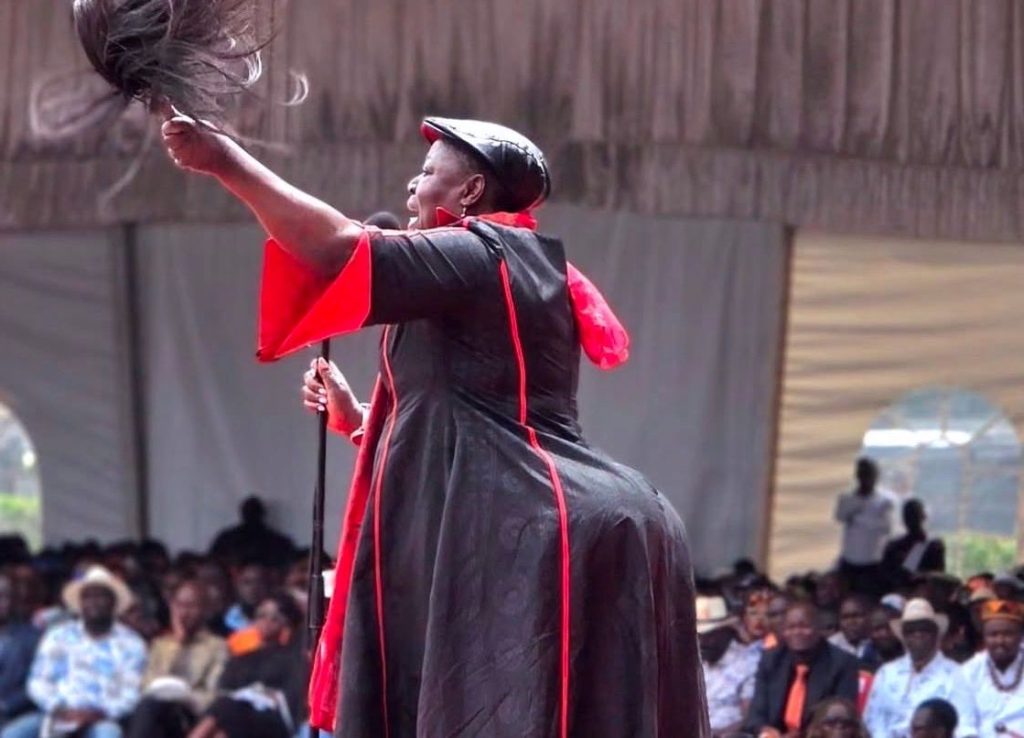
And yet we saw combative women leaders in the ODM brigade like Millie Odhiambo and Ruth Odinga repeatedly use it, waving a flywhisk at the assembled mourners – again another traditional symbol of authority used strictly by male chiefs and clan elders. My friends and I found that rather unusual. Where we come from, the flywhisk, colobus monkey hat and cape, buffalo-hide shield and spear signify patriarchy.
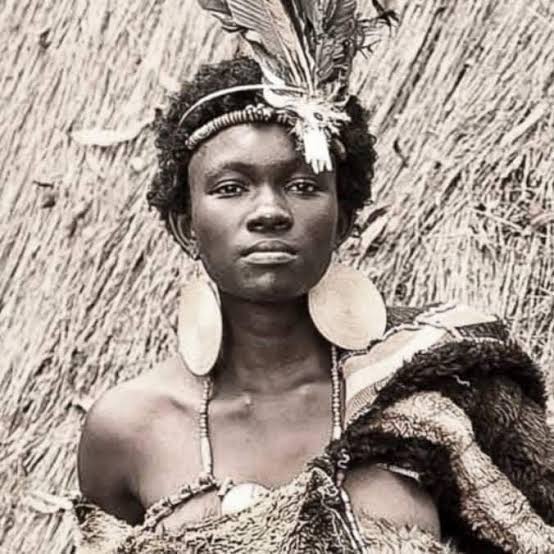
Which is not to say that we don’t have matriarchal societies on the continent. The examples are there in plenty from History books. The closest that come to mind are the fabled woman-warrior, Mekatilili wa Menza, of the Miji Kenda along the Kenyan coast, Wangu wa Makeri from Central Kenya, who sat on men’s backs for a stool during public barazas, Arawelo among Somalis and closer home Nakhabuka among the Banyala. Those were likely to have wielded a flywhisk when holding court. There are more examples from the matriarchal and war-like baKongo tribe of the Congo and the famous Dahomey Amazons of West Africa, among others. But for Nyanza and Western Kenya, martriachy would still be cutting her milk teeth.
We are talking of a region where women traditionally never sat on a three-legged stool at a public gathering. A region where women were required to sit cross-legged on the ground at a public hearing presided over by the elders, even where they were the aggrieved party. A region where the senior wife in a polygamous household dutifully accompanied the Mzee of the boma to a busaa-drinking session carrying his stool for him, and perched on the ground between his spread knees sipping from his straw out of the first shared ‘women’s’ pot before they were dismissed to go home to supervise the household, leaving the wazee to enjoy the rest of the brew.
Meaning that Ruth Odinga waving that flywhisk and uttering ‘Jooowi!’ at a gathering of dignitaries – among them ambassadors and heads of state – was a revolutionary act; a master stroke in the class of martriachy in a male-headed region that the colonial administrator, Charles Hobley, Obilo christened Kavirondo.
There was another curious practice that we were waiting for at the elite funeral: the digging of Baba’s grave. Among the Luhyia, after a burial site has been identified by the clan elders, one of the elders is handed a hoe to ‘tema’ – literally ‘cut’ – the grave. Thereafter the task is handed over to the gravediggers, who are almost always village layabouts who are supplied with copious amounts of local chang’aa gin and weed to consume openly as they go about the grim business of preparing a final resting place for the departed.
It is customary to offer the gravediggers a chicken, which they slaughter and cook by themselves at the graveside as they work. Normally, this duty presents the village layabouts with the opportunity to ‘eat’ from an otherwise snobbish family in the village who ordinarily wouldn’t let them into their gated compound; it is their time to get even and remind them that they are of the clan, regardless of wealth and social standing. My writer-friend, David Kaiza, tells me that it is a similar practice in parts of Uganda close to the border; which goes to show that territorial borders might just be lines drawn on a map by those white folks who sat at a table at the infamous Berlin Conference that birthed colonialism.
Now, what we found strange about Baba’s grave was that the funeral committee chose to bring in a backhoe to do the job, denying the village drunkards a chance to eat – something bordering on sacrilege! How now? Who was going to eat Baba’s ‘grave chicken’? Were they going to give it to the tractor?
It later emerged that the reason for it was that the ground at the site at Kang’o ka Jaramogi was too rocky, and that it would have taken too long to get the job done by hand, going by the tight schedule set for the funeral. Regardless, our wag was only pacified when he later saw the village lads take over after the machine drove off.
Like everyone else, we were all disappointed at not being given time enough to mourn Baba properly and eat and drink at his funeral as we wailed and sang and danced. A leader’s funeral is not rushed in this part of the world like the case for that of a man who had commited suicide. Our wag was not happy at all, regardless if that was Baba’s wish. And he had a point too, because close to a month after Baba’s interment, mourners are still flocking to Opoda Farm to pay their respects. Going to show that culture stands supreme in the face of so-called ‘modernity’.
That said, there is a curious story I have been told about my own hometown of Chavakali and how it came by that name, and which came to mind as I watched Ruth Odinga wave her flywhisk. Chavakali, in Lulogooli dialect literally translates to ‘ the place of women’, although there ias another cheeky translation of the same that we won’t delve into now. The story goes that at some point the Maragoli were at war with the neighbouring war-like Nandi tribe, who wanted to drive them from their farmlands. That when the conflict got heated and the Nandi roped in their Kalenjin brothers for support our men grew cold feet and started quaking in their boots. That seeing their menfolk retreating from the battlefront and knowing that we were on the verge of losing our farmlands the women rallied to a -er- (wo)man and gathered at Chavakali, dragging their quaking menfolk along, and dared them to strip off their pants and hand them and their spears over so that they could go into battle to defend their lands.
The tale goes that this open challenge on their manhood from their wives was too much for the warriors to bear. And thus, emboldened to defend their honour and masculinity, they rallied forth and surged back into battle with a remarkable ferocity that quickly turned the battle around in their favour, causing the startled Nandi warriors to flee.
Like all legends, it is difficult to authenticate the truth in this tale. But thinking about it in relation to what Oby Obyerodhiambo said, then this must have been the ‘Jooowi!’ moment for the Maragoli, even though, paradoxically, in this instance, their ‘Jooowi!’ call-to-arms was uttered by women!