The Baptism of Noah Jahera and how the colonials captured Africa’s religious imagination
It is common knowledge among our people that if you want to rule the lowlands, you must visit the shrines of our Kings, those who held sway over men by the sheer pull of personality in the hope to inherit their following.
As many are trooping to Kango’ Ka Jaramogi, where the crown of Raila Amollo Odinga is buried along with Obadiah Adonija dynasty, many more have trooped to older shrines of the great ancestors whose choices brought us into the inheritance of haven on earth.
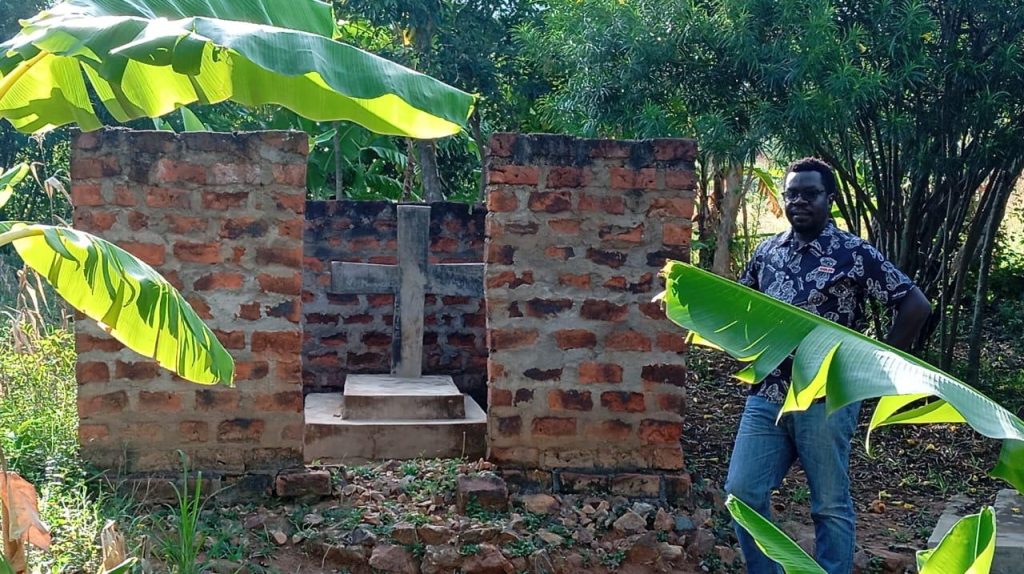
I visited two of the shrines of the Abanyala Abamulembo Kings Paul Khasamba Namwonja wa Mukudi and Nicola Mukudi Namwonja. I also paid a courtesy call to Nyangera where the shrines of Anam Ulwa and Jairo Okello the last of the Kadimo chiefs should stand, not in search for Kingship, but for Kinship.
I hail from Abalubanga clan, a family of court officials in the great royal houses of Nyanza which meant that we are related by marriage to all the royal families who ruled from the West of Bunyoyoro Kingdom all the way to Kavirongo gulf. Namwonja married two Nalubangas (Namanjaba and Sirali), And his son also married the last living daughter of my great-grandfather Otiato Guguyu. Two other daughters from Otiato’s house, Nanjala and Amuduba were also married to Anam Ulwa’s sons, while my father married the daughter of Romano Ombere Mukudi, son of Ex senior chief Mukudi.
This maternal great-grandfather of mine had many names, Noah Mukudi Okwaro Nyabondo Nichola, which tells an interesting story of his evolution from the cultural Kingdom he inherited from his father into modernity and Christianity.
Read also: Namuonja the Manyala who ruled North East Nyanza before we became Kenya
In December 2025, I spent the holidays transversing Nyanza and Western Kenya rural interior, in search of the story about the complex intermarriages that had held a lasting peace among communities along lake Nyanza that it created the concept of mashemeji. I went to glean some information about these great men and houses whose stories can explain what today is taken for granted.
Take Siaya for instance, I am told, and which I hold this to be true, that the name comes from a Saina (a Kalenjin name) who had a bull which could not be herded, which translates to Siaywa in Kinyala. So people nicknamed him Siaywa after the bull. During my trip to Idokho Rugunga during a get-together of his lineage, I heard this name still surviving in its original form among his progeny.
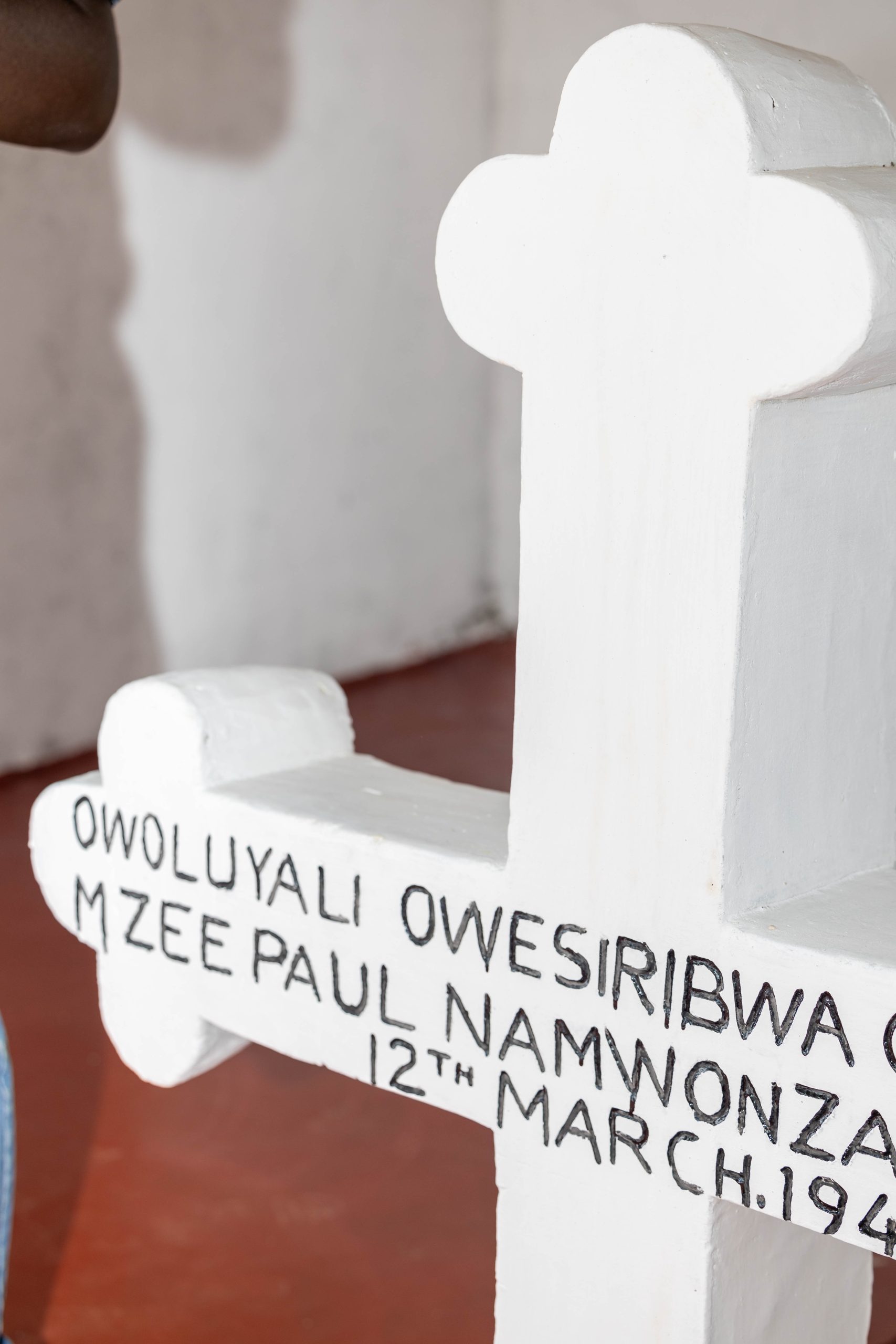
During the visit, I paid homage to Namuonja’s shrine, which is still intact despite being the last King of the Banyala before the white men took official control over this geography. The white mausoleum has entombed his coffin like a hen laying over delicate eggs.
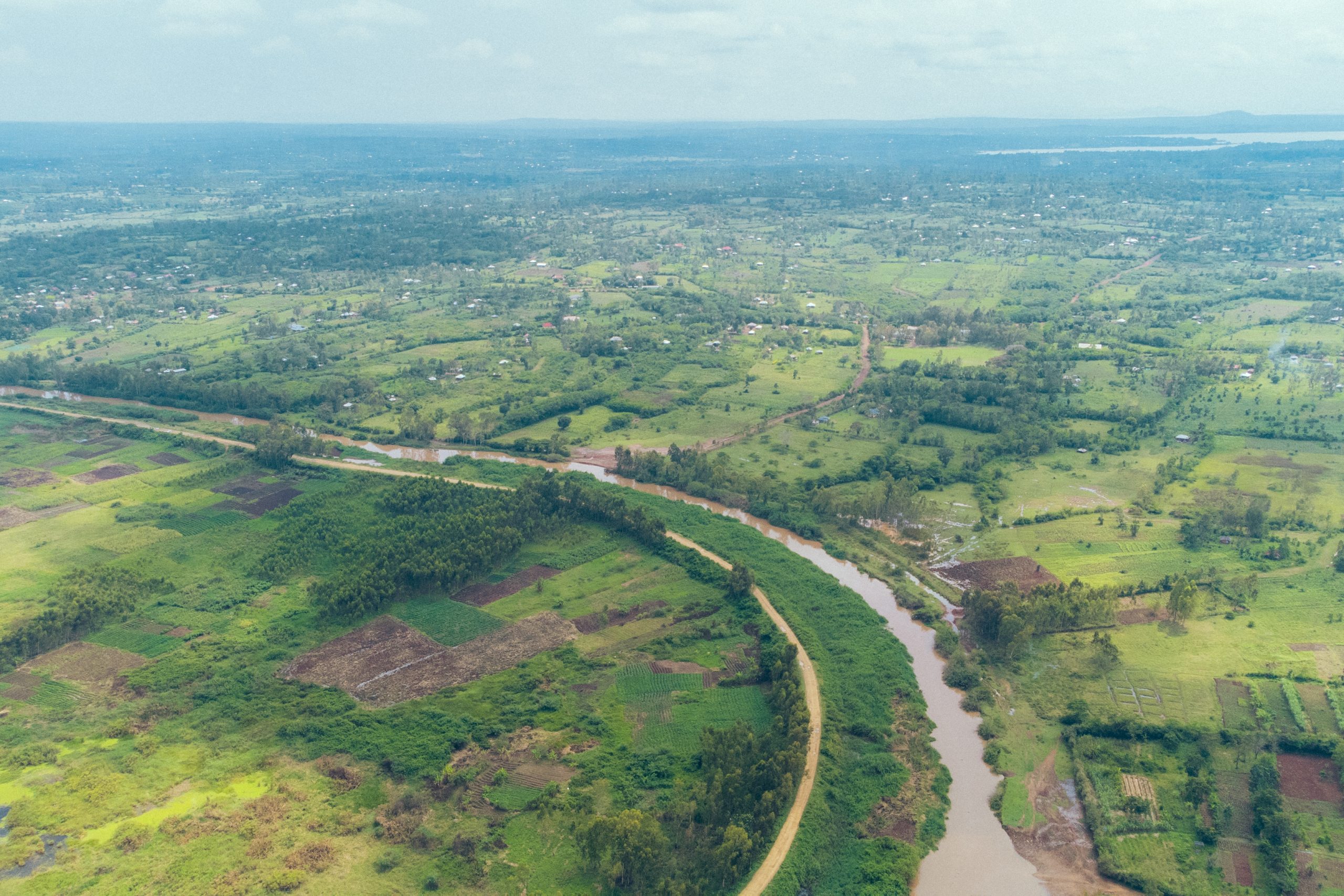
This King had chosen his palace where River Nzoia enters Lake Nyanza, a serene, picturesque homestead with constant water supply, fertile silt, that sustained a legendary herd of cattle that had the King nicknamed Namuonja Gombe.
He is said to have been a musical genius and shrewd ruler who embodied the concept of Mashemeji having married 34 wives and giving his daughters to Samia and Luo royalty to buy a lasting peace. For instance, Namwonja’s daughter, Mukudi, was married in Samia and Kadimo, leaving both homes and a complex web of relationships that I witnessed unravel around the narrative of the great King. His other daughter Ochumbo was also married to both Anam Ulwa and Jairo Okello, his son, under the old tradition of inheriting the chief households, but also left Nyangera.
In Yimbo, the Kadimo clan had chosen the seat of their domain, where Yala enters the lake like a mudfish, at Nyangera. This legendary westpoint where the sun sets in breathtaking murals is known as Chuny piny, the heart of the world, and the point to which the Luwo people who sailed up the Nile from Bar El Ghazel settled.
I attended Ochumbo’s get-together at the home of her grandchild, George Riako Anam, and later had a brief trip to Nyangera, the main home of the rulers of the lake people. While I was not able to visit the shrine of Jairo Anam, I heard that it is well maintained and that in this side of the inlets, it is the older Chief Anam Ulwa’s shrine that needed to be raised, probably after the traditional mud hut shrine collapsed and his grave had fallen into a history of neglect and lately a land sale.
Ochumbo returned to live with her brother, Noah Mukudi, who had risen to Chiefdom after Namuonja’s abdication in 1918. Namuonja was demoted from hispost after refusing to be subservient to the Wanga throne.
Noah Mukudi chose Ruambwa-Buulukhiro for his palace, where the river bubbles and rumbles towards Inyanza, silting its banks with thick black cotton soil. He lost his Buulukhiro palace to tribal power shifts under colonial rule and retreated to Namalo hill, where he was laid to rest upon his death.
His rule was tumultuous, it saw him navigate the geopolitical storm outside his society and the seismic movements within it, earning the King’s Jubilee Medal in 1935 and the Chief’s Star in 1938, then taking the Mau Mau oath in his retirement. He coordinated Mau Mau activities in Bunyala, and was arrested and imprisoned in Kajiado Prison in 1954 before he was released in 1955.
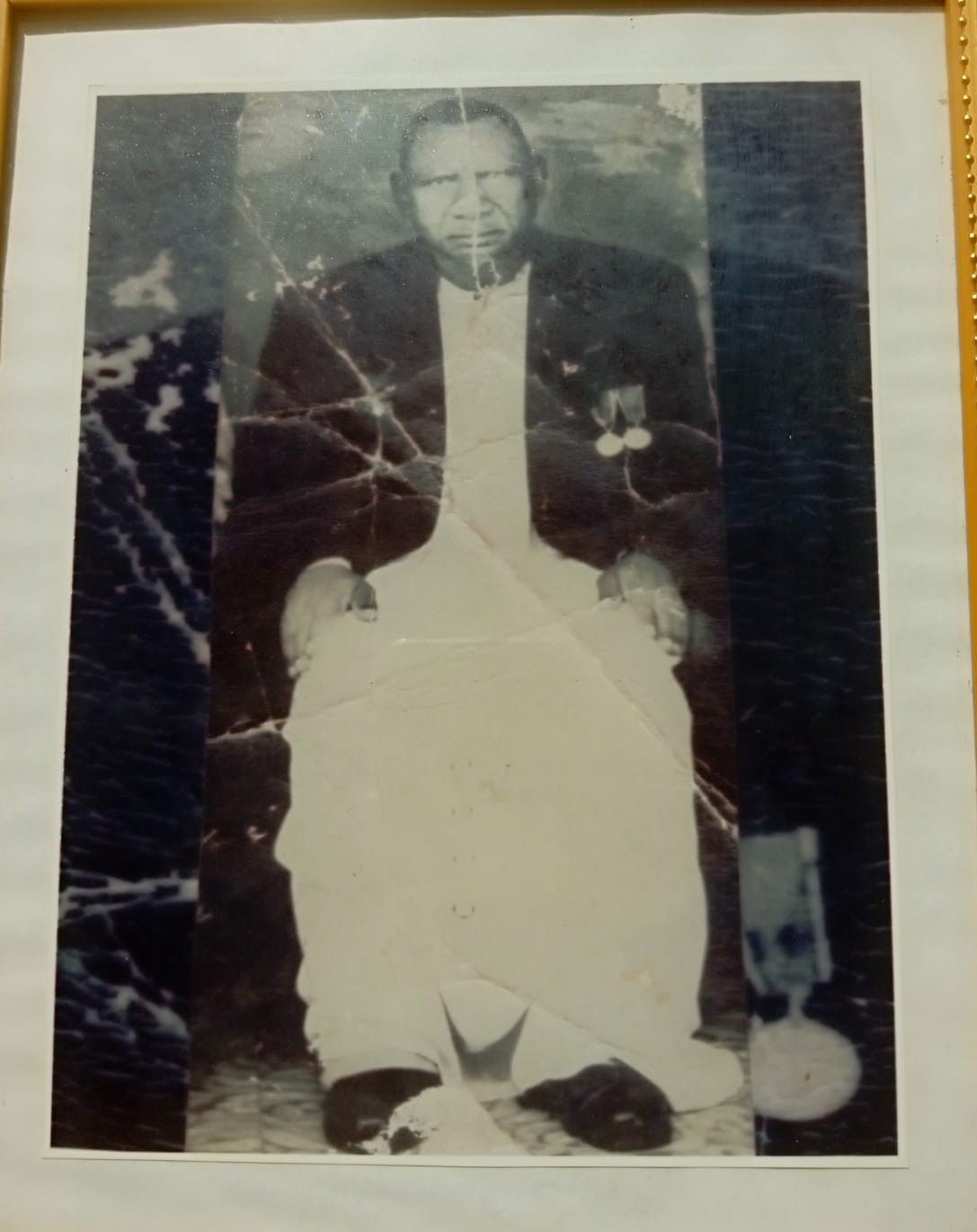
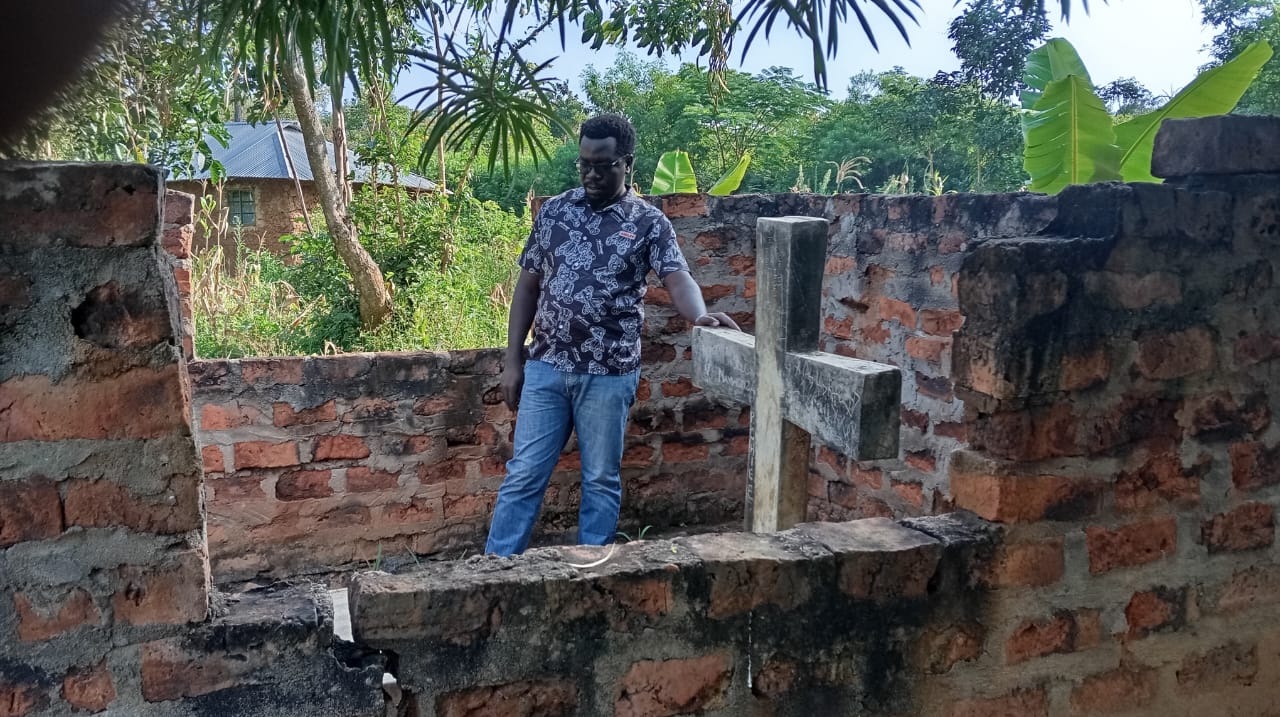
It was over breakfast that I learned that Noah Mukudi also changed names and for a very religious reason. I had visited his shrine, at Namalo, where a skeletal brick structure that matched the ambitions of his father’s only in height stood with open spaces.
What compensated for the incomplete structure, however, were the sweetest mangoes on earth on trees that grew wild here, and you only needed to shake the twigs and mangoes would rain down like childhood candy.
When I posted the picture, I captioned it wrong. My mother said the next morning over a cup of tea, a lot of pastry, and blood pressure medication.
The order of names is important because of the naming system of the Banyala. Abanyala have a unique way of naming, called Okhukulikha, where members of the society with admirable attributes are named; those with bad attributes fade out, a self-correcting mechanism that breeds good societies and keeps it in check with the fear that one would have to compel relatives to name them after they die by making babies cry incessantly.
While it is good in theory, most children get named after Kings, and so in practice, everyone has to get a nickname to differentiate themselves.
For instance, in the line of Abamulambo Kings, the names recur like an unbroken chain of a community striving to distill admirable qualities and recycle them through generations.
Noah Mukudi Okwaro Nyabondo Nichola inherited the throne from Paul Khasamba Namwonja Mukudi. He, in turn, had inherited the throne from Mukudi 2, who followed Khainja, Khasamba, Mukudi 1, Wanamanda, Makanda, Kwambo, Siaywa, Murwa 2, Were, Mulembo, Murwa 1, and Aramakanda in the long tradition of renaming good leaders.
My mother does not have much of a memory of her grandfather, who she says she only heard from her mother’s legendary stories about him.
One interesting fact was that he had built a Luo-dominated African Independent church called ‘Johera’ and was referred to as Noah Jahera –the Lover, where he led his people as their political, cultural and religious leader in the cult of love.
This ancient culture interlopes how biblical teachings were interpreted by local elite. Noah, the man who conquered floods and saved every species of animal captured the imagination of a water people who had committed each clan to the conservation of Lake Nyanza biodiversity through animistic religion that revered each of these fauna and flora saved by the man of god.
Agnes Ogula, a descendant of Namuonja who has done a lot of research on the history of Abamulembo kings, says Mukudi was baptized in the Catholic church but probably changed his name when he joined a ‘Johera’.
He had initially helped the Catholic’s to build churches at Nangina in Samia, Dibworo in Usonga and Port Victoria in Bunyala among other before building his own church at his home in Namalo.
For the colonials, capturing the imagination of local leaders was important because it was the easiest way to influence the entire geography these men led as political, millitary and religious heads
Ms Ogula says Mukudi changed from Abanyala religion because like every African, he was beguiled by the white missionaries to believe that they believed in the wrong God, yet that was the same christian God.
The British used to wrap African ideas around preexisting narratives of Sun worshipers and their beliefs in immortal resurrections into worship for the son of god and his teachings.
She says a mzungu Catholic priest at Port Victoria mission, Father Fabishen, who was popularity known as Father Biese went around Bunyala baptizing ancestral spirits and boats.
Sumba the prophet was baptized Paul, Sumba the wrestler became Joseph, and his fiance Nakhabuka became Mary. Sumba was a prophet who had supernatural and healing powers and in now the name of islands of Bunyala’s coast.
“My dad’s boat was baptized Lusabeti (Elizabeth) and Osogo’s was Teresa. Many people argue it was a way of luring people into the church through inculturation (the adoption of the gospel to different cultures and tolerance to their practices). However, it seems the Catholic church understood the spirit world more than meet the eye, she said.