Ikolomani gold; a blessing or a curse?
As students at Government African School, Kakamega (GASK) in the 1980s we always knew that our school rested on a massive undiscovered gold vein that stretched from neighbouring Ikolomani (bastardized Luisukha for ‘Gold mine’) all the way to the River Yala basin and further on into Vihiga. Every time we sneaked out of school to go partake of the sins of Murram Village we would interact with the artisanal miners of Roastermine, Ikolomani; wiry chaps who were no more wealthy than we were after selling the brand-new pails and Bata Prefect shoes of the newly-admitted monos, but who had the miner’s glint of striking a life-changing fortune someday that would dramatically transform their lives; a hope that they clung onto fiercely even as they drowned their sorrows and growing despondency in Murram’s hooch glasses.
Although the original European gold miners at the Roasterman mine in Ikolomani used mechanized systems, the locals resorted to artisanal mining when they left with their machines in the 19 (. )s, and this form of mining has progressively impoverished the local communities since it is extremely dangerous, claiming casualities or permanently maiming the miners every time a mine collapses, especially during the rains. The Kakamega County Deputy Governor Ayub Savula had to order the Shiveye mine closed on December 7 after the earth caved in and claimed the lives of three miners trapped inside the crudely -made shafts.
Read also: Kenyans reject privatization of public parks
The risks aside, the miners also have little to show for it since they are ruthlessly exploited by the brokers who buy the unrefined gold at the end of the day for sale to bigger dealers in Kisumu and beyond.
On December 4, 2025 the National Environment Management Authority (NEMA) convened a meeting at Isulu in Kakamega to discuss the impending acquisition of their lands by the British mining company, Shanta Gold, in order to pave way for commercial mining. It turned chaotic, resulting in three casualties and 10 injured as the protesting public clashed with the police.
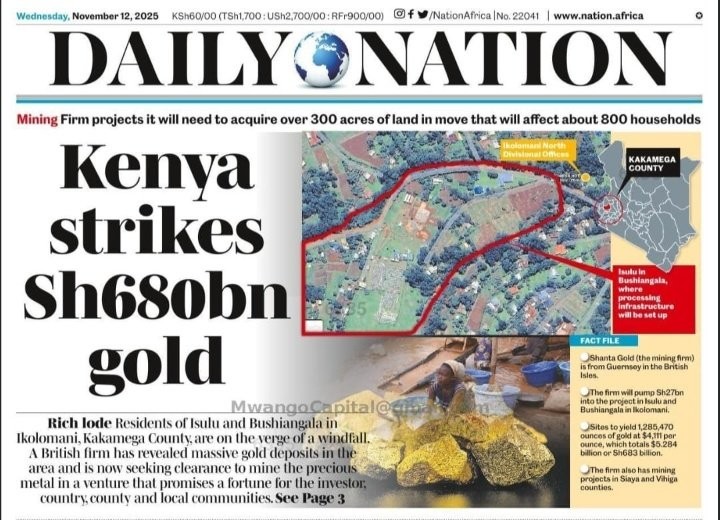
The main reason the community was protesting was the Ksh3 billion which they were being offered as compensation, and which when shared, would result in each family receiving roughly Ksh 3.7 million. They felt that this was too little – an insult even. Overhanging this was an ingrained distrust of the government, given what has transpired elsewhere in such situations. If successfully extracted, Shanta Gold estimates the total value of Ikolomani gold at Ksh 683 billion.
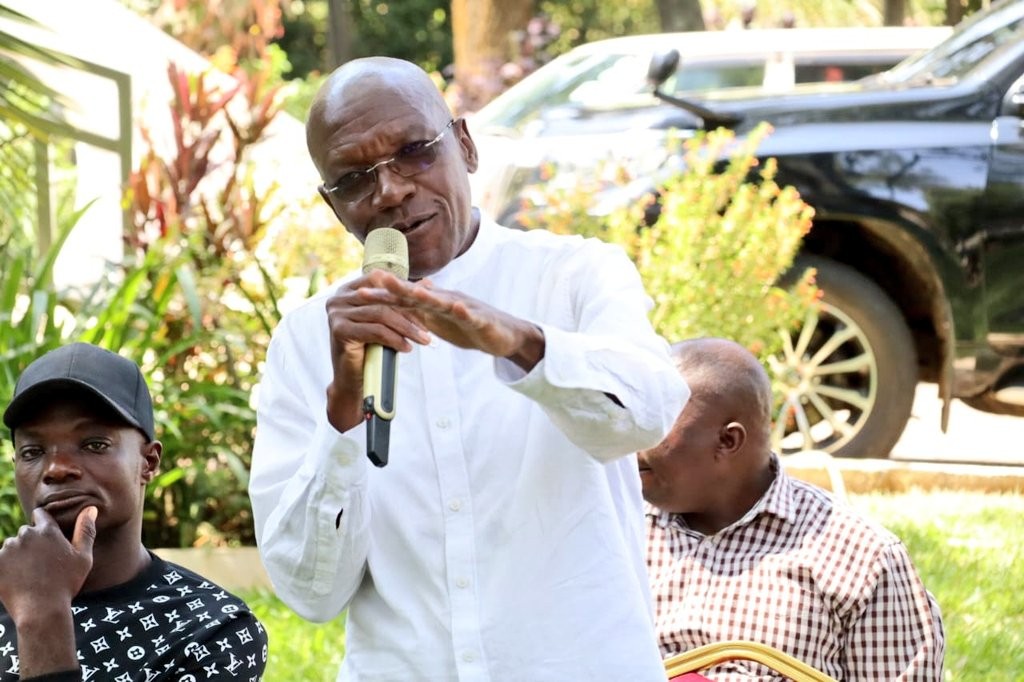
The compensation plan has been opposed by local leaders, prominent among them being Trans Nzoia Governor George Natembeya and Kakamega Senator Boniface Khalwale, who feel the community is being given a raw deal.
At a press conference on 6 December, Natembeya said, “Ikolomani residents firmly reject Shanta Gold’s plan to seize 337 acres, displace over 800 households, and extract gold worth Ksh 683 billion while offering only Ksh 3 billion in compensation. Recent deadly clashes at NEMA hearings expose a coordinated scheme to disposses communities of their ancestral wealth.”
In the proposed sharing formula, the national government will receive 70 percent of the royalties paid by Shanta Gold, the county government of Kakamega 20 percent, with the local community receiving the remaining 10 percent.
In addition Shanta Gold will also be obliged to contribute 1 percent of its annual gross sales to a community project managed by a local committee, and which will go towards funding projects like roads, schools and health facilities.
According to the community the Ksh 3 billion is not enough to compensate their loss. There are those who feel that the government needs to give them land and build them decent houses commensurate to their living standards.
There’s also the matter of family fragmentation in a community that has traditionally lived in close-knit settlements sharing deep cultural and family ties. The social – cultural effects of the migration will be immense and irreparable.
Others opposed to the project are calling for an amendment of the constitution to do away with Article 62 (1) (f) of the Constitution of Kenya (2010) that bestows ownership of any minerals and mineral oils found anywhere within Kenyan territory on the government. They say it is a punitive law designed to benefit the colonialist at the expense of the community where the minerals were found during the colonial years, and which needs to be repealed 60 years after independence. That it is the reason why lots of African mineral wealth is stored in the vaults of European banks up to date, even where Europe doesn’t produce those minerals, thanks to the puppets and corruptible government officials who inherited the systems designed by the departing colonialist.
They’d rather the government sets up a refinery in Ikolomani instead, as is the case in Uganda and Burkina Faso, among other countries, in order that they may derive maximum benefit from the minerals.
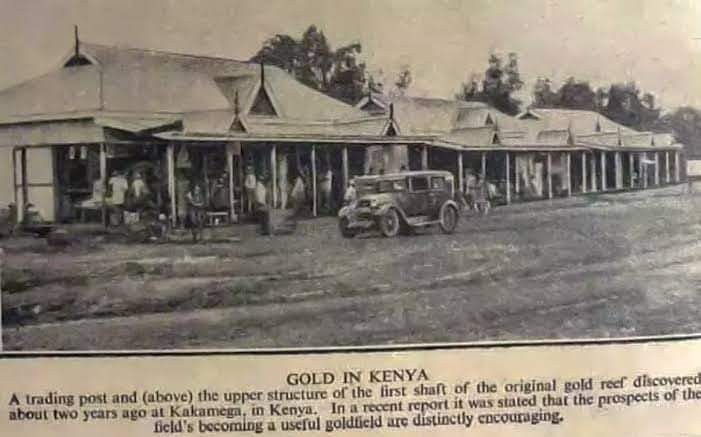
The discovery of gold in Kakamega in 1931 triggered a massive gold rush that brought in more than 3000 European prospectors, prompting a massive displacement of the locals from their traditional lands. It is this displacement that gave the community a name.
When the colonial Kenya Land Commission (KLC), who had believed that the people they collectively called the “Bantu of Kavirondo” were different people’s, arrived to investigate the resultant land dispute, they were surprised when their spokesmen spoke as one people called the “Luhyia”.
It is the exact same situation playing out in Ikolomani today where, although predominantly home to the Isukha subtribe, it has progressively been settled by members of other Luhyia subtribes over the years through land-acquisition inter-marriage, and such. It is the reason George Natembeya, speaking from the wider Luhyia diaspora in Trans Nzoia is speaking out about the matter.
There are the extremists who feel that this is a massive landgrab underway, disguised as an investment. That people are being forcefully displaced enmasse similar to how the natives were driven to the reserves during the colonial years. It is a concern shared by villagers in nearby Nyatike in Migori County, where demonstrations were set to be held on 17 December during a visit by President Ruto.
Believed to sit on massive gold reserves, Nyatike’s case revolves around one man, former governor of Migori County, Okoth Obado.
At one time Obado owned over 400 acres of land believed to harbour gold deposits, and which he surrendered to the state, in addition to neighbouring village land as part settlement in the Sharon Otieno murder case debacle that also saw him forfeit prime real estate in Nairobi, Migori and other towns.
It is the villagers whose land had been affected in the deal who were protesting.
The intrigues about the intention by the government to sell the entire block where gold had been discovered deepened when an explosive was discovered planted at Nyatike bridge prior to the president’s visit.
According to the conspiracy theorists, it was a ploy to justify the deployment of excessive armed AP police officers to the area to facilitate the landgrab.
Whatever the outcome in the two situations, transition to orderly commercial mining will definitely alter the lifestyles of the residents of both Ikolomani and Nyatike, if at all agreement will be reached between the government and the affected communities. The effects of artisanal mining are the same in villages all over Kenya.
While their Ikolomani miners blow away their little fortune in Murram and other dens of pleasure, across in Nyatike the miners in Kadem village ‘chafua’ tables with bottles of beer surrounded by sex workers who have crossed over from Tanzania at the whiff of gold money. In neighbouring Vihiga the situation is no different in the mines near Lunyerere on Idzava River.
The miners, overnight village millionaires, blow away their daily earnings in the shebeens that always come up where a new mine opens, knowing full well that tomorrow they will make more. As for those that I have interacted with who work in gold extraction in Vihiga, their health continues to deteriorate steadily because of exposure to the chemicals they come in contact with daily, given they work without any protective gear and are not accorded medical care or cover by their employer, despite paying them well.
In the meantime their abandoned mud-walled houses in the village continue to delapidate as their families await their return from the mines with the elusive fortunes; that is, if they are fortunate enough not to come back home in a bodybag.
From what I was seeing of those Vihiga mineboys, chances of them dying early and leaving behind young families with no meaningful investment to show for it are very high. Soon after the son will drop out of school and troupe to the mines in search of work, continuing the vicious cycle, with the attendant social problems.
This is the situation that an orderly operation can rectify. Of urgency, the government should step in to ensure that the gold extraction process by the artisanal miners, which involves the use of heavy metals like mercury, does not polute rivers and streams. The government can also help to ensure that the miners go about their activities safely, and also bank and invest their money through saccos, given gold is not a renewable resource but generational wealth that needs to benefit future generations. One day the gold will run out and the mines will close.
At the tail end, is what happens to the old mineshafts after the mine closes. There is a maze-work of massive underground shafts underneath parts of Johannesburg city that the city authorities, even with the city’s fabled wealth and technological advancement, has been unable to seal and plug off: the skeletons that the city’s wealthy neighborhoods like Sandton perch on. They are the havens of gangs and drug dealers, and the police dare not venture there. It is the reason whenever we were busted by cops in those Murram and Roasterman shebeens and had to run, there were parts of the valley where you never ran towards, even if the cop giving chase was armed. You could easily disappear into an overgrown shaft, never to be seen again. Better to risk a bullet in the butt. That could be extracted by the doctors at Kakamega General on your lucky day.