How Mzembe escaped a ten thousand shillings fine, ‘I went to college in Nairobi’
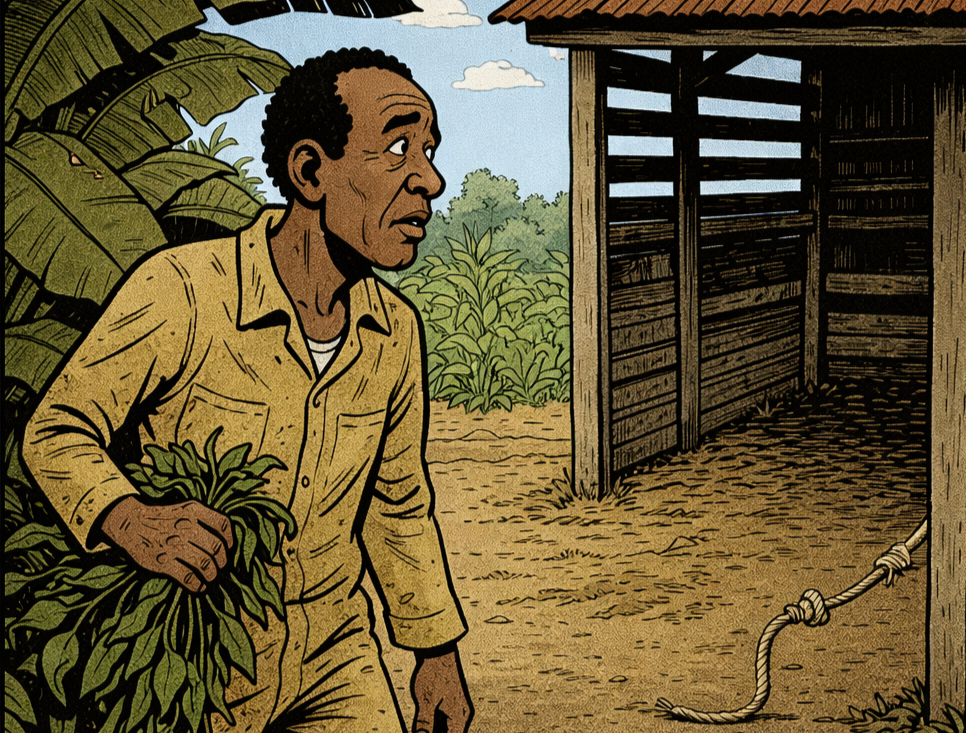
Mzembe emerged from the banana patch behind his house and immediately sensed that something was a miss. He was carrying a bunch of vines that he had collected from the patch of sweet potato he had been harvesting but the cow he was bringing the vines to was not there. The cowshed next his house was empty, only the old sisal tether remained, tied in place as usual, but broken off at the noose.
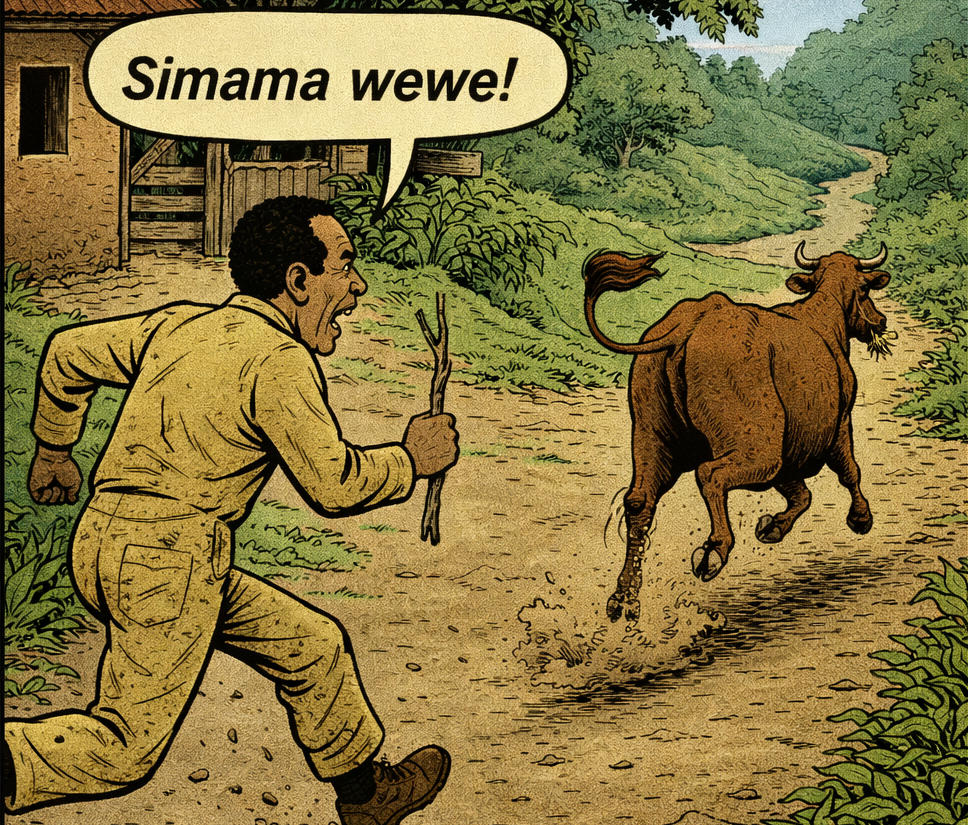
He dropped the vines and went to the front to find out. And there it was, his old brown cow cropping the front lawn slowly. As soon as it saw him it started ambling off towards the compound entrance. “Simama wewe!” he barked, hurrying after it. It paused a little at the compound entrance and sniffed the air, it’s grass-stained teeth bared, savouring the taste of freedom now that it was free of the loathsome tether. Then it turned and flashed him a sheepish grin and calmly turned out of the compound, taking the fork in the path that led down to the river.
He ran after it and barked the order to stop, but it only trotted on, shortly before it broke into a full run, raising it’s tail straight in the air, hind hooves kicking defiantly back at him.
Read also: The man who turned condoms from taboo to Nyanza songs
Mzembe cursed and looked around. He broke a switch off a tree sapling and gave chase, shouting a barrage of insults. But the more enraged he became the faster the cow ran.
The chase ended deep in the valley in boggy ground overgrown with reeds and thick with thorny rutavati bushes. Mzembe edged after the mad cow and gave it a fine lash of the switch on the rump, cursing. But this only made it edge deeper into the bog. Soon he was entangled in a fine tanglement of the thorny bush he realized he could go no further. Instead he was faced with the herculean task of disentangling himself, trying in vain not to get scratched by the tenacious sharp thorrns.
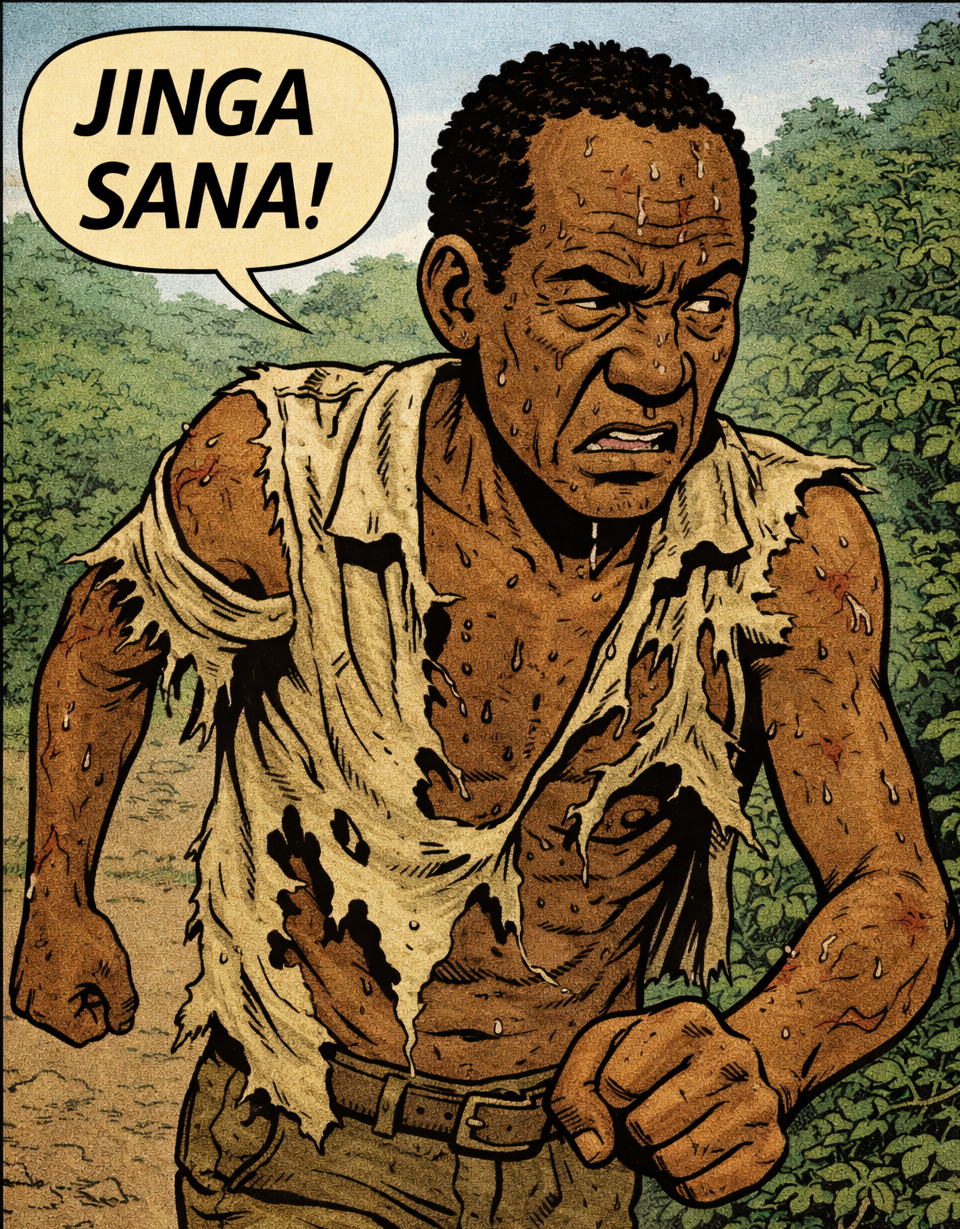
By the time he made his way out of the bog onto the firm ground of the path he was itching all over, his shredded shirt hanging onto his thin frame like a tattered old flag hanging outside a remote government outpost. The itching got worse when the salty sweat sipped into the many cuts all over his body. He threw the switch away, took one last look at the cow browsing deep in the bog, and decided he was wasting his time standing there. He dug up a clod of earth and hurled it at the bush. “Jinga sana!” he shouted. Then he turned and stormed off on his way home. It had been a long day on the farm and he was tired and sore. All he needed now was a cool bath, and then he would be off for a drink and a chat with the boys. The cow could as well be eaten by jackals or wild dogs in that bush for all he cared!
When he later returned after hammering a few glasses of chang’aa with the boys, a jolly whistle playing on his lips, he found the cow tethered in it’s darkening shed by his wife, who was standing by. When he turned around he became aware of three figures sitting on the bench on which he received his visitors at the edge of the compound, and who rose and approached when he appeared, their walking sticks tapping the ground. In the shed the cow was watching them with interest, it’s belly bloated, looking well fed. The whistle died on his lips when he saw who his visitors were: the ligutu village-elder, another elder who worked with him, together with his neighbour to the right, a quarrelsome spiteful old man called Amenge. These three were not his favorite people.
He glanced at the well-fed cow in the shed and then back at the three and it all fell in place.
“I can see you already can tell why we are here, Mzembe,” said the village-elder, hawking authoritatively. “Your cow strayed into your neighbor Ambenge’s farm and caused quite a bit of destruction to his maize crop, which was nearing maturity, and he brought us a complaint.”
“That’s right, Mzee,”said Ambenge, his eyes flaming. “The damage is enormous, as they say, and now you are going to pay me ten thousand shillings, or the matter proceeds to trial at the next Chief’s baraza.”
Mzembe glanced from one elder to the other, his mind whirring, the fugue of the hooch he had taken lifting. “Ten thousand, you say? Pheeew! That’s a lot of money. Where do I find it?”
“You heard what your neighbor said, Mzembe. And we have assessed the damage. That is how much he costs the loss. And so, it is either you two agree, or the matter goes to trial,” said the village-elder dryly.
“Well, maybe we should sit down,” said Mzembe, his thoughts in overdrive, leading them back to the bench.
“Well, what do you say?” said the other elder after they were seated, eyeing their host judiciously. “Is it a cash settlement, or shall the matter go to trial?”
The neighbour, who was seated at the far end of the bench with the elders between them, was eyeing Mzembe from underneath lowered brows, as if to say, “There, I finally got you, you old toad!”
Well, if that is what you think. . .thought Mzembe, clearing his throat. . . .then you don’t know the janja you are dealing with. . .
“You say my cow has caused damage to my neighbour’s crop and that he has assessed the damage to be worth ten thousand shillings. Well, I don’t dispute what you say since the cow indeed broke it’s tether. It was an accident that can happen to any village farmer. But as I said, I don’t have the kind of money my neighbor is asking for.”
“Which means the matter goes to trial,” jumped in Ambenge.
“Well, not so fast,” said Mzembe, scratching his cheek. “Maybe there is another way around it.”
“And which is?” said the village-elder, leaning forward.
“I think a fair way to solve this matter would be to take a tour of Ambenge’s farm tomorrow morning and then count how many maize plants were destroyed.”
“But . . .?” said Ambenge, springing off his butt, alarm flashing in his eyes.
“Please hear me out,” said Mzembe, raising his hand. “As you can see I have a healthy crop of maize on my farm that is also almost maturing, just like my neighbours. I think what we’ll do is that we’ll take count of the damage, and then when we are ready to harvest I will invite my neighbor over to harvest the same amount of maize that was damaged from my farm. And he will be at liberty to pick the biggest cobs. That way, I think we shall have settled the matter amicably without the need of going to trial. Now, what do you say, Ambenge?”
This was clearly an angle the scheming elders, who had seen an opportunity to collect a commission from the fine, together with the calculating neighbour, had clearly not foreseen. It sliced through the dispute like a hot knife through butter with a touch of Solomonic wisdom. A common villager had beaten the local administration at a seemingly complex dispute hands down.
The ligutu village elder was the eyes of the Assistant-Chief in the village, who in turn was the eyes of the Chief, on and on up the rigid colonial administrative system all the way up to the Office of the Presidency. Meaning if you commited a treasonous act or a crime in Nairobi and came to hide in the village it is this who would sniff you out and report you to the relevant authorities. These are the elders who terrified university students during the Mwakenya years of Moi’s dictatorship during the 1990s.
Not that they were angels who were liked by all. They were the same wazee who ruthlessly collected harambee donations for Wakubwa from hapless villagers during the notorious Moi years, hawk-eyed experts in snatching the biggest cock or duck they could spot in the compound of those who couldn’t pay up. It is said they always walked around with grains in their long trenchcoats to entice the chickens they fancied.
They are the same wazee, with the connivance of the local Chief, who parcel out riparian land in the ghettos straddling the polluted Nairobi River at a fee to new city arrivals who want to put up a mabati shack.
On the day the dispute was resolved and Ambenge came over to select his choice cobs, Mzembe sat on the bench in the shade watching his greedy neighbour salivate over his prosperous well-manured crop, unable to decide which of the fat cobs to chop down, watched over by the two elders, who were taking count. After they had carted off their harvest and left Mzembe left to go for a drink. The matter was not over yet.
Later that evening, now that he had put enough drinks under, Mzembe decided to discharge a dose of communal justice to his neighbor the only way the villagers knew ever since the days of their ancestors. For the women, they hitched up their skirts, tucked in their lesso nicely and exploded in the noisy tirade at the village shopping center or at the market in broad daylight, their arms planted akimbo on the massive hips that had sired a clan, spit flying out of their frothing mouth. As for the menfolk they preferred the late hours after a visit to the brewer’s hut, when it was quiet just before the villagers turned in to bed.
“Jinga sana!” shouted Mzembe when he turned into his compound, moving up to the fence so that he could be heard clearly by his neighbor, hawking and spitting angrily into the hedgerow. “You should thank God that you have a generous neighbour like Mzembe who is also a good farmer; thanks to him you will not go hungry with your household full of your vidwadi daughters and their fatherless brats! Just look at him, coming here with that other useless kinywere with your big mouths . . .ati, nye-nye-nye-nye! . . . ten thousand shillings; do you know what ten thousand shillings is, you idiot? Have you ever held ten thousand shillings in your hand at one go? Nkt! Kiyingwa sana! Heheee . . .! You thought your day of harvesting from Mzembe’s pocket had come . . .you forgot you were dealing with someone who went to college in Nairobi, and not another illiterate village layabout that you could easily intimidate and rob . . . Heeei! Not here, my friend, this time round you will accompany your ugali with a pinch of salt and wash it down with plain water, and not the fat minofu you were planning to whittle out of Mzembe. . .Ng’o!”
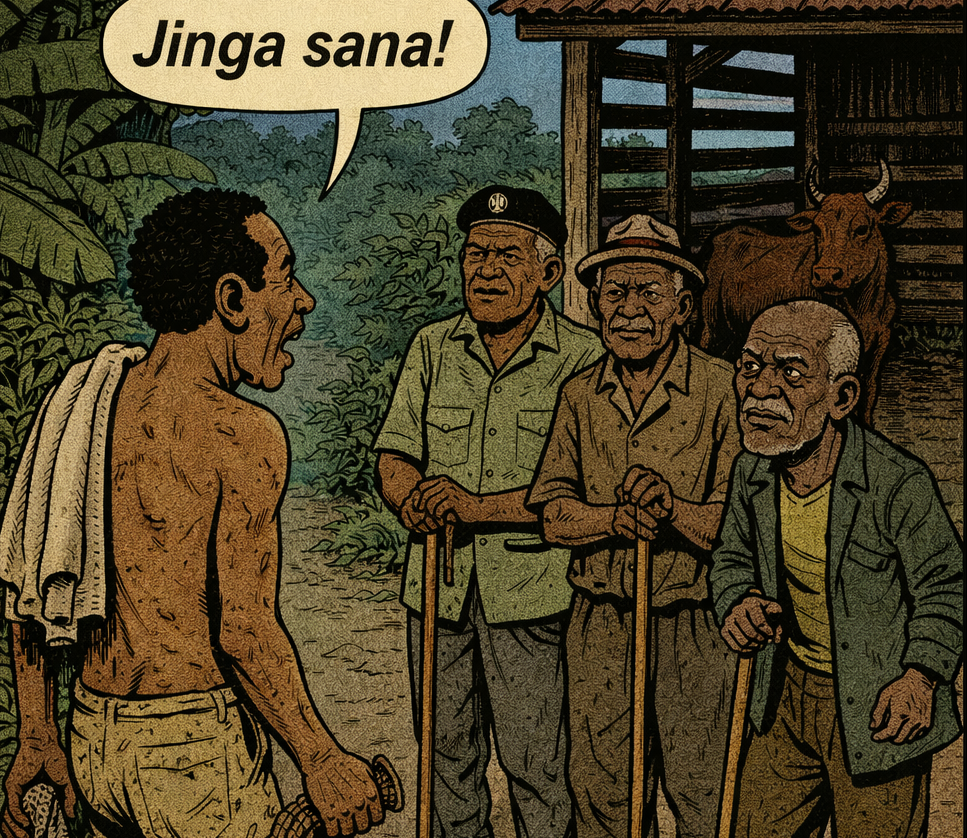
Before he went inside he turned around to deliver his parting shot. “And remember I have bought a new tether for the cow. But just keep in mind that as long as you still keep cattle yourself your day will come one day. Woe unto you if one of yours breaks tether and enters my farm. That is the day you will know who you are neighbours with. I assure you I will pay you back in a fine coin, my friend! Nkt!”
And with that he went inside and banged the door.
As predicted the agitated neighbour turned up in his compound early the following morning, their loud “Hodi hapa!” getting Mzembe out of bed. He was in the company the village elder and another elder who usually accompanied him, dressed in their moth-eaten World War trenchcoats. They were looking very grim.
“Mzembe, we have received a complaint from your neighbor that you were insulting him and his household last night, is that true?” asked the village-elder when Mzembe stepped out, waving his walking stick at him.
Mzembe squinted at them, then rubbed his sleepy eyes and yawned into his fist.
“And what happened to the courtesy of greeting each other first and finding out how their night went?” asked Mzembe. “I thought that is how we villagers traditionally went about our affairs in the morning?”
“Cut out that nonsense, Mzembe,” said the village-elder curtly, “now, did you insult your neighbor here last night or not?”
“Now, I wouldn’t know a thing about what I was saying to anyone last night; you see, I don’t seem to remember anything.”
“Wh-what do you mean you ‘don’t seem to remember anything’?” asked the elder, astounded. “You are not trying to play with our minds, are you? You think we came here early in the morning to waste time?”
“It is not that, Mzee,” said Mzembe, still yawning into his palm. “You see I was totally drunk, I can’t even remember if I ate supper or not.”
At that point the wife, who had been listening behind the door, stepped out to fortress the defense of the nutter she lived with. “And he is not lying about it either. This useless Mzee of mine passed out on the floor soon as I opened the door and I left him to spend the night there since I couldn’t lift him into the bedroom. It is true, he was so drunk he even pissed his pants right where he lay.” Her nostrils were flaring as she gesticulated wildly.
In the end the elders left, shaking their heads, accompanied by the seething neighbour. It was difficult to make the case of a drunk who wet his pants to stand at the baraza.
And as he watched them leave his compound for the second time through slitted eyes, Mzembe was smiling to himself. He wondered if they knew about the Drunk and Disorderly charge, or that of Disturbing the Peace? Probably they did, being the crafty old weasels that they were. But then, it occured to him it would require a sharp lawyer to make them stick at trial against a drunk who was jabbering inside his own compound at night. That is why they had probably let it slip. Crafty weasels indeed, he laughed to himself.