An old man’s last bow DEATH TRANSITION

As a nurse, one of the hardest parts of my work is witnessing a patient’s final moments. With time, of course I have kind of been inured to that. I have grown accustomed to the physical reality of death: the stillness, the silence, the soft surrender of a body letting go. But what never becomes easy is the emotional work that surrounds it. Providing psychosocial support to families is a skill we are expected to possess yet are rarely trained for. A lot of us in the medical fraternity are ill equiped. Probably because this topic is glossed over in most of our curriculums. Somehow it is believed to be something we will somehow learn on the job.
The challenge, in Kenya is compounded by how late many people seek medical care. Healthcare is expensive, and families fear hospital bills that rise beyond several thousand shillings; an amount that can swallow months of income. Our system is stretched thin: fragile financing, limited insurance coverage, scarce resources, overwhelming demand. By the time many patients reach the hospital, life and death are already locked in a fierce tug-of-war.

Read also: Dead heroes, a celebration by people ageing with a forgotten pandemic
Yet expectations remain high. No matter how advanced the illness, there is a belief that stepping into a hospital guarantees healing. And because death is taboo, rarely spoken of or prepared for, its arrival often comes with shock, anger, and blame. You didn’t do enough. You misdiagnosed. You neglected our patient. These accusations sting, even when we have done everything humanly possible.
But many moons ago, while on night duty I met a man whose final hours unfolded in a way that was completely different. Earlier in my career, it would have left me spiralling with anxiety. I reported on the night shift and found an old man—four score and a half years— having been admitted for two days in the ward . He had truly eaten salt and seen much, the proper mhenga.

During handover at the nursing station, I learned his haemoglobin level was dangerously low at 3.2 g/dl. A request for blood had already been sent to the lab.
My colleague added quietly, “The priest came this afternoon. He gave him the anointing of the sick.”
There was something final in the way she said it, but we carried on. I settled for the night’s tasks by sending students to check the pharmacy for medication refills. Meanwhile I checked the lab for blood. There was no blood in our lab, and a request had been sent to the regional blood bank. All we could do was wait.
Haemoglobin carries oxygen in red blood cells, keeping the body alive through perfusion. Too little of it, and the body begins to suffocate from within. The blood grows acidic, heavy, dark. Oxygen becomes a dwindling commodity. We offer supplemental oxygen to buy time; sometimes minutes, sometimes hours.
As the night deepened, the old man began to struggle. His breathing grew laboured. I reached for the pulse oximeter—that peg like little gadget that clips to the finger. His lips were bluish, and though he was propped up in bed to ease his breathing, it was clear that each breath cost him effort. His arms jutted outward like Father Abraham’s—“who had the whole world in his bosom” I knew then that the sternocleidomastoid, trapezius, and pectoralis major muscles were all working overtime. A silent orchestra summoned only when the body is desperate.
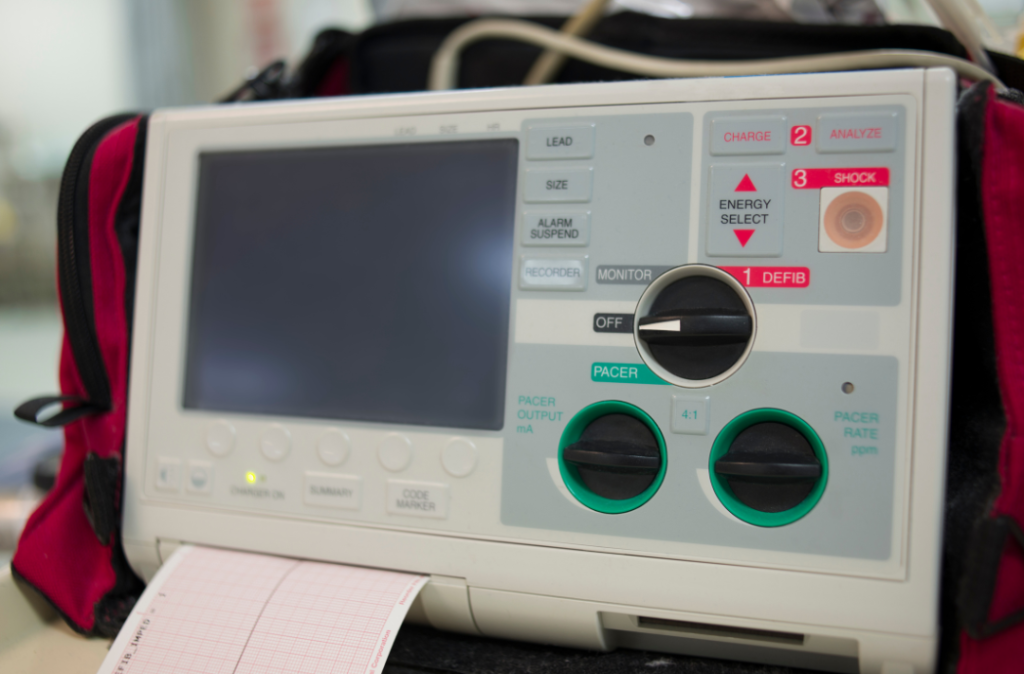
After a moment, the pulse oximeter beeped: tititit! tuttit!
The screen read 72%.
I wasn’t surprised, but I still felt that familiar drop in my stomach.
I dashed through the hospital looking for one more breath to offer him, but every patient I found was fighting a battle just as fierce. Every cylinder, every concentrator, every reserve was already in use.
When I returned to his bedside with empty hands, I knew what the night might hold. I was fully aware of what diminishing oxygenation and perfusion would bring.
And yet; this is where the story shifted.
Instead of panic, I found peace. The old man lay with his eyes half-open, seeming to hold both light and history. At the very edge of life, I had expected some agitation or even confusion, but he was calm in a way that made the entire ward feel momentarily still.
I tried obtaining consent to set up an IV cannula. My intention was to administer crystalloid intravenous fluids, but he refused gently. Still I persisted and when I returned with the fluid, he opened his eyes and looked at me with surprising calm.
“My daughter,” he whispered, “don’t trouble yourself. The time is nigh. I have a journey that must not be delayed.”
I thought he might be delirious, but his voice was steady.
“We’re doing all we can, Mzee,” I said. “Blood is coming.”
He shook his head.
“No. My ticket is ready.”
“I already received the sacrament of anointment for the sick,” he added.
But grief rarely arrives quietly.
One of his sons stood by, trembling with worry. “Father, please don’t say that,” he begged. “You will not die tonight. The nurse will help you.”The old man reached out and touched his son’s hand.
“My son, you cannot bargain with the One who holds the timetable of life. Be at peace.”
One son said, “We should move him to a private ward. They might have oxygen.”
Another snapped, “Use your head! He’s tired—can’t you see?”
“Stop it,” their mother barked. “Talking like that will kill him faster!”
The old man opened his eyes.
“Enough,” he said, his voice thin but commanding.
“Do not quarrel. Peace is the only gift I want tonight.”
A faint smile wavered at the corners of his lips. His son, who had been pleading with me to save him, stood nearby, silent now. The old man whispered something to him, and moments later, the son took out his phone and began calling.
The night slowly wriggled toward dawn. The ward settled into that peculiar hush that comes when life and death sit very close to each other. At midnight I managed to get an oxygen concentrator. I connected the oxygen tubing to the mask and placed it over his nose and mouth. Somehow the old man’s breathing improved and a hint of colour returned to his lips.
Around five in the morning, the old man’s children arrived—five sons and a daughter. He asked the sons to wait outside. He beckoned his daughter forward. She knelt beside him, tears falling freely.
From where I stood, I watched him pull out a wad of notes, perhaps twenty thousand shillings.
“Use this for the hospital bill and the funeral plans,” he told her.
“The rest of my money is hidden in the house you’ll find it where I told you. Slaughter my bull Rapogi. Go and see fundi Stano about my casket. I owe no one a cent. My debts are paid.”
When the sons returned, he spoke to them in low tones. I couldn’t hear the words, but I could see their faces soften.
Then, summoning a strength that surprised all of us, he asked his children to hold hands.
“Let us pray,” he said.
Their voices rose softly in unison; five grown children encircling the life that had once encircled them.
“…Deliver us from evil. Amen.”
When the final amen left their lips, the old man’s ship had already sailed. His chest had grown still. His face was serene. He slipped away in the arms of his children, exactly as he had wished.
For a long moment, no one moved.
Then the daughter bowed her head over his hand and wept loudly.
I stepped back, giving the family space, but also because I was struck by something like awe.
The ward, often chaotic and loud, seemed wrapped in a strange, sacred silence.
As dawn filtered through the windows, touching his peaceful face with gold, I realized I had witnessed a departure of rare grace. In a world where death is feared, denied, and shrouded in accusation, he welcomed it as a familiar friend. He had prepared himself. He had prepared his children. He had closed every account: financial, emotional, spiritual.
He had met death the way one meets an old friend.
He kept saying his journey must not be delayed.
And it wasn’t.